A Big Decision
The room was already quiet when Peter spoke.
“Alright.”
That was all it took for everyone to turn toward the center of the room.
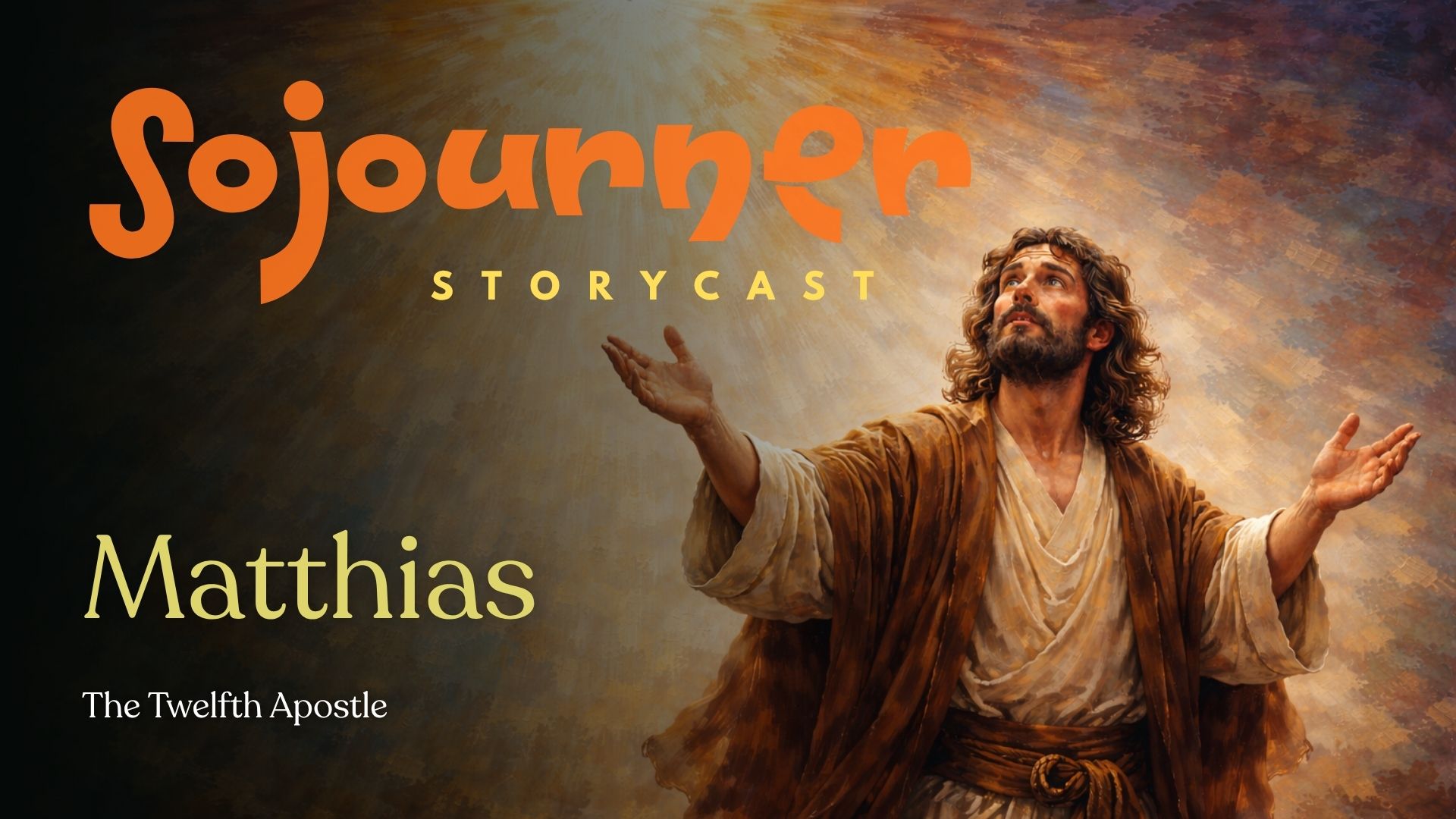
Two men stepped forward into the center of the room. The light from the windows fell across them as they stood side by side. Joseph, called Barsabbas, also known as Justus, and Matthias.
Around them, people leaned in slightly. Someone whispered near the back, “They’ve both been with us since the beginning.” Another voice answered softly, “It could be either one.” But even those words were careful, as if no one wanted to tip the weight of the moment.
Peter lifted his hand, and the quiet deepened. “Brothers,” he said, “we cannot choose this by ourselves. The Lord knows every heart.”
Heads bowed. The room shifted from discussion to prayer.
“Lord,” they prayed together, voices overlapping, “You who know every heart… show us which of these two You have chosen…”
When they finished, no one moved right away. It was the kind of silence where even small sounds felt loud.
Then someone stepped forward and placed small objects in the center of the room. They were simple—ordinary pieces that didn’t look important at all. But everyone’s eyes followed them. In moments like this, God’s people had long ago learned to trust Him with even the smallest things, believing He could guide what seemed random.
A hand reached forward.
The lot was cast.
Peter finally broke the silence.
“Matthias is numbered with the eleven apostles.”
Who was Matthias?
Hi Sojourners!
Welcome back to the Sojourner Storycast! Have you ever heard of an apostle named Matthias?
A lot of people haven’t. In fact, he’s only mentioned briefly in the Bible—and after that, we don’t hear much about him again. No big speeches. No famous miracles recorded. Just a quiet moment where his name is called… and he steps into one of the most important roles in the early church.
What Is a Disciple?
When Jesus was on earth, He especially chose twelve men to follow Him. Those men are known as the twelve disciples. A disciple is a person who follows Jesus, learns from Him, and tries to live the way He teaches. Think of a disciple like a student. The twelve disciples Jesus chose traveled with Him, listened to His teaching, and saw the amazing things He did.
Now there were many people listening to Jesus and walking with Him during His time on earth. I guess that would mean they were disciples too. But out of all those followers, Jesus especially selected twelve men. Why?
Why Did Jesus Choose Twelve?
Do you remember a man named Jacob from the book of Genesis? Later, God changed his name from Jacob to Israel. And do you remember how many sons Jacob had? He had twelve sons, and those sons became the twelve tribes of Israel. The tribes of Israel also known as the nation of Israel were God’s special people in the Old Testament. So the number twelve is very special—it shows up again and again in God’s story.
In the Bible, the number twelve often means something is complete or whole. That helps us understand why Jesus chose twelve disciples. He didn’t just pick twelve people by accident or because it was a nice number. He was showing something important—that God was starting something new and special.
Just like the twelve tribes of Israel in the Old Testament, Jesus chose twelve apostles in the New Testament. The tribes showed God’s people under the old covenant, and the apostles became the foundation of the Church under the new covenant. Jesus was not copying Jacob or repeating a pattern by accident—He was showing that God has always been building one united people for Himself through His plan of redemption.
And these were the names of the twelve disciples that Jesus chose: Peter, Andrew, James, John, Philip, Bartholomew, Thomas, Matthew, James (the son of Alphaeus), Thaddaeus, Simon the Zealot, and Judas Iscariot.
But the last one, Judas Iscariot, made a very sad choice. He betrayed Jesus and turned Him over to the leaders who wanted to arrest Him and after that, Judas was no longer part of the special group of twelve disciples.
But with Judas gone, there were only eleven disciples left. And remember, twelve in the Bible often stands for something complete—so eleven meant something was missing. And the believers knew this wasn’t just a small detail. The number mattered to them. So they came together and asked God to help them choose someone new to take Judas’s place.
And this is when we’re introduced to Matthias, the disciple who was chosen to take Judas’s place and he was numbered with the eleven apostles.
What Is an Apostle?
Are you wondering what an apostle is? Another word the Bible uses to describe the twelve disciples is apostle. The title apostle means “someone who is sent.” So an apostle is more than a disciple, but also a messenger sent by Jesus, carrying His words and His truth wherever they go.
And these were the requirements for being an apostle: the person had to have been with Jesus the whole time—from when He was baptized all the way to when He went back to heaven—and they had to have seen Jesus alive again after He rose from the dead.
This was important because the apostles weren’t just telling stories they heard from someone else—they were sharing what they had seen with their own eyes.
And another very important requirement was that he had to be chosen by Jesus. That’s why the believers didn’t just pick someone on their own. They prayed and asked Jesus to show them who He had chosen. They trusted that Jesus knew exactly who should take Judas’s place.
In the Bible, “casting lots” was a way people would ask God to help guide their decision when there were a few good options. It looked a bit like drawing marked stones or sticks, and whichever one was chosen showed the result. In the Old Testament, God sometimes used this method to guide His people—for example, when dividing the land among the tribes of Israel. The people didn’t see it as luck; they believed God was in control of the outcome and guiding the decision.
That’s why the believers also cast lots when choosing Matthias—they were praying and trusting that God would show them His choice. But after Jesus sent the Holy Spirit, we don’t see casting lots used anymore in the same way. Today, God guides His people more clearly through the Holy Spirit, through reading the Bible, through prayer, and through gathering with other Christians. So while God did use casting lots in the past, He now leads His people in deeper and clearer ways.
Why Matthias’ Story Still Matters Today
1. God sees people we might overlook
Matthias isn’t someone we hear about a lot, but Jesus chose him. That reminds us that even if others don’t notice us, God sees us and knows our hearts.
2. God has a plan, even when things change
Judas leaving was sad and confusing, but God’s plan didn’t stop. Matthias being chosen shows us that God is still in control and keeps His plans moving forward.
3. We can trust God to guide our choices
The believers prayed and asked Jesus to help them choose. This teaches us that we can pray and trust God to help us make the right decisions too.
Key Scripture
“And the wall of the city had twelve foundations, and on them were the twelve names of the twelve apostles of the Lamb.”
Revelation 21:14 gives us a beautiful picture of how God’s story comes together in the end. It talks about the New Jerusalem, which is God’s forever home—a perfect, holy city where God will live with His people and there will be no more sin, sadness, or death. In this city, there are twelve foundations, and on those foundations are the names of the twelve apostles of Jesus.
Do you know what a foundation is? A foundation is the strong base of a building that everything else is built on. It’s the part that holds the whole building up and keeps it steady so it doesn’t fall down. Without a strong foundation, nothing else would be safe or stable.
That’s why it’s so special that Revelation says the names of the apostles are on the “foundations” of the city of God—it shows they were part of the very beginning of God’s Church, helping support everything that came after.
And did you know that Revelation 21 also tells us that the name of the twelve tribes of Israel from the Old Testament are written on the gates of the city of New Jerusalem? The gates of a city are how people enter in. So when the names of the twelve tribes of Israel are written on the gates, it symbolizes God’s people being welcomed into His presence.
Together, the gates and the foundations show that God is building one united family from the Old Testament to the New Testament, and bringing His people safely into His forever kingdom. It all shows that God’s whole story—from beginning to end—is connected and complete in Him.
So when we see the number twelve in the Bible, from Israel to the apostles to the picture of New Jerusalem in Revelation, it reminds us that God is always building something whole, united, and lasting through Jesus.
Matthias in Church History
The Bible doesn’t give us any more information about Matthias after he was chosen in the Book of Acts, but early Christian writings and tradition tell us that he faithfully served as an apostle and preached the gospel boldly. Some traditions say he ministered in regions like Judea and beyond, sharing the message of Jesus with courage. Like many of the apostles, he is believed to have faced suffering for his faith and may have been martyred, though the exact details aren’t certain.
And that actually makes his story even more powerful. Matthias wasn’t famous before he was chosen, and we don’t hear much about him afterward—but God saw him, chose him, and used him in His bigger story. That reminds us that God’s work isn’t just about the well-known names. He sees the quiet faithfulness too. And just like Matthias, we can trust that if we follow Jesus faithfully, our lives are part of God’s story as well—even when the world doesn’t notice.
If Matthias’ story encouraged you, share this episode with a friend so they can be encouraged too. You never know how God might use a simple story to remind someone that He sees them, knows them, and has a purpose for their life.
And remember—God is always building something bigger than we can see, and He is faithful to complete every part of His plan.
Links to podcast: