Let’s recap the “sevens” we’ve already encountered in Revelation:
- Seven letters to the seven churches
- Seven seals
- Seven trumpets
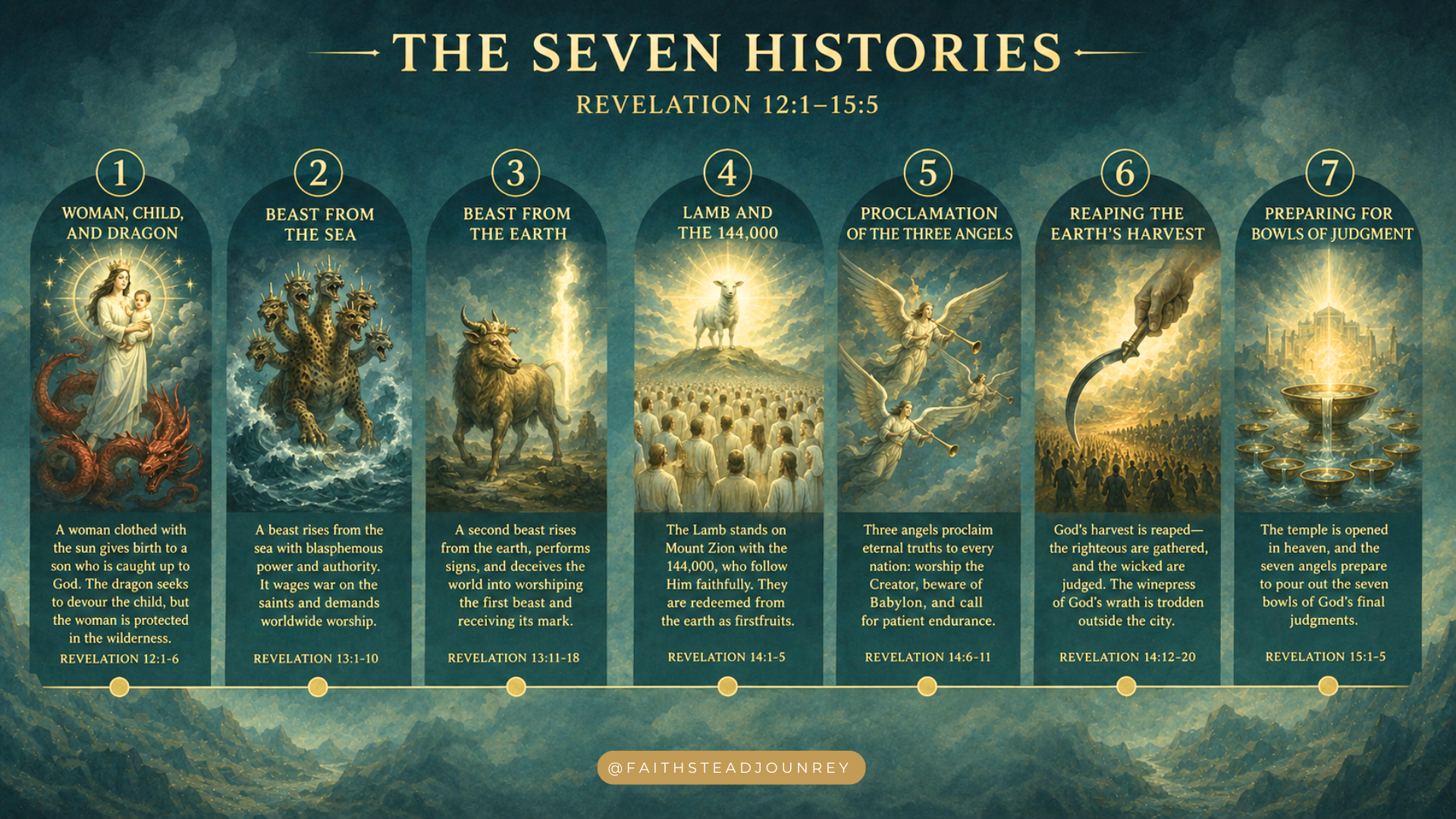
We left off with the sounding of the seventh trumpet, which introduces the third woe. Before the seven bowl judgments begin, however, John pauses to give us an interlude made up of seven histories—the section we’re exploring this week.
Seven Histories
This week marks the midpoint of the seven cycles of “sevens” in Revelation.
These “histories” are not merely historical events from the past. They are heavenly perspectives on realities that have happened, are happening, and will continue until Christ returns. They reveal the ongoing spiritual conflict behind human history. And this week I have lots of charts!
The First History – The Woman, the Child, and the Dragon
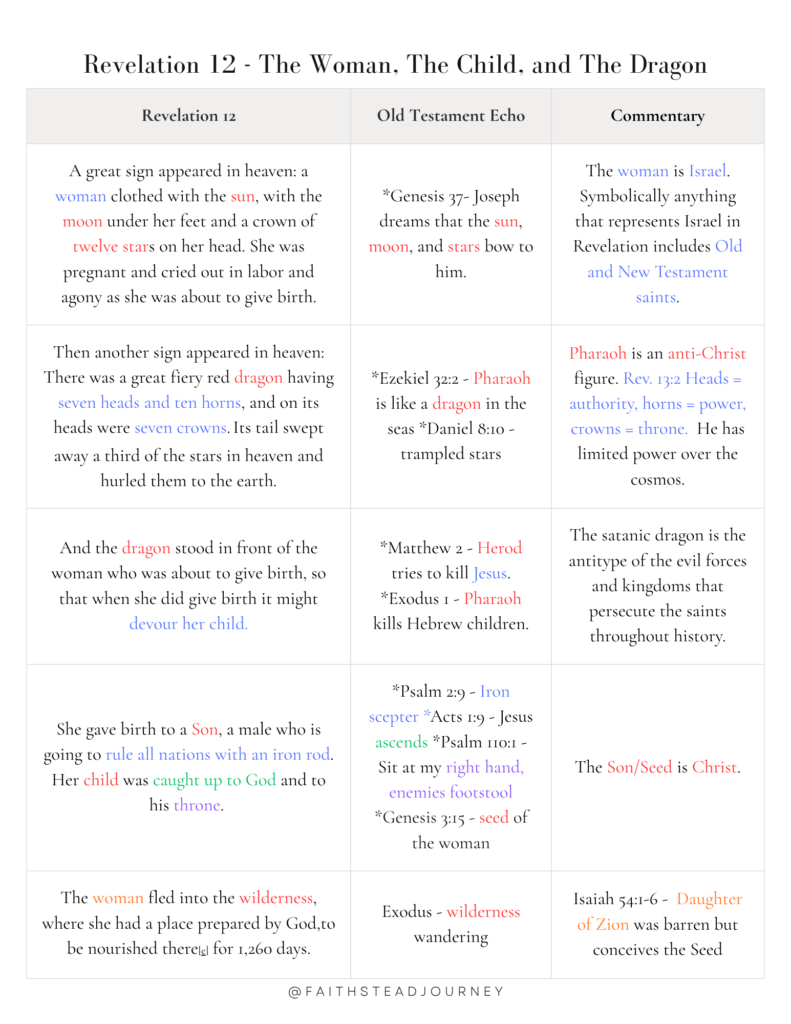
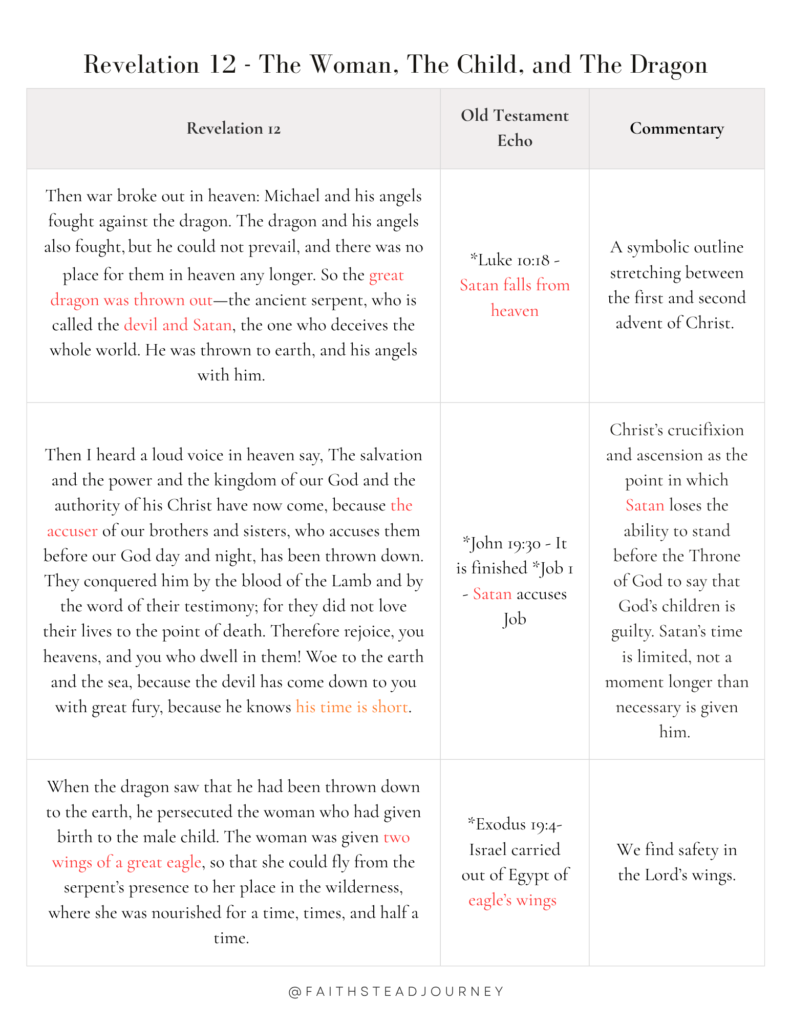
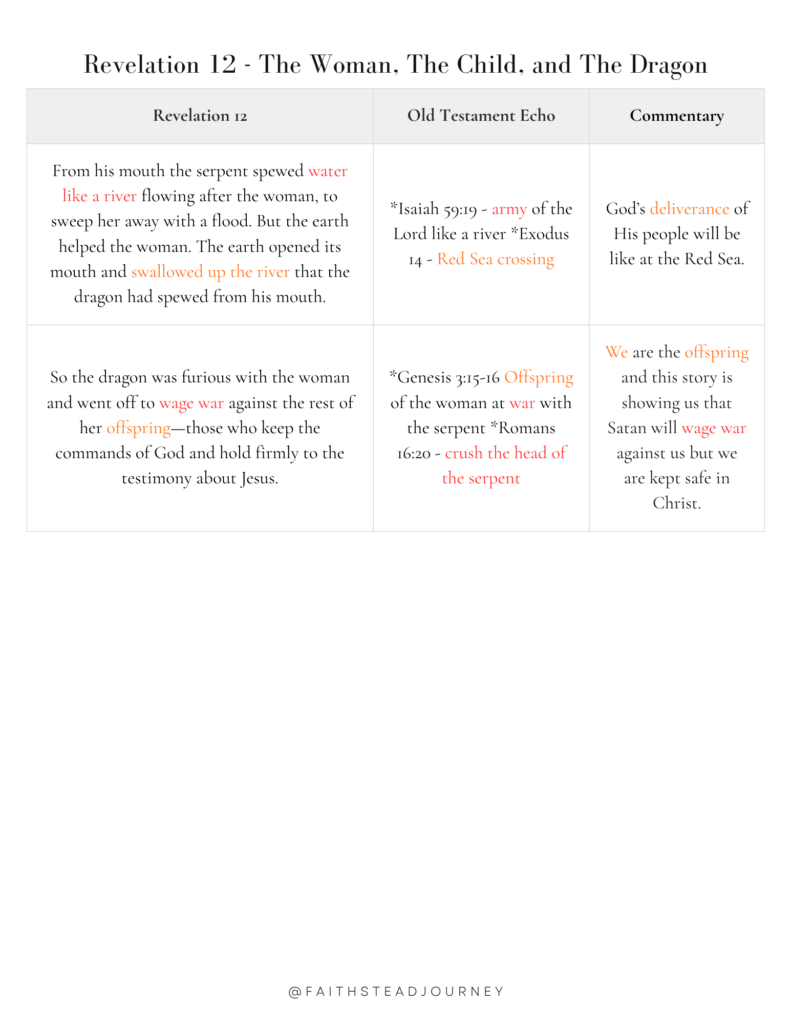
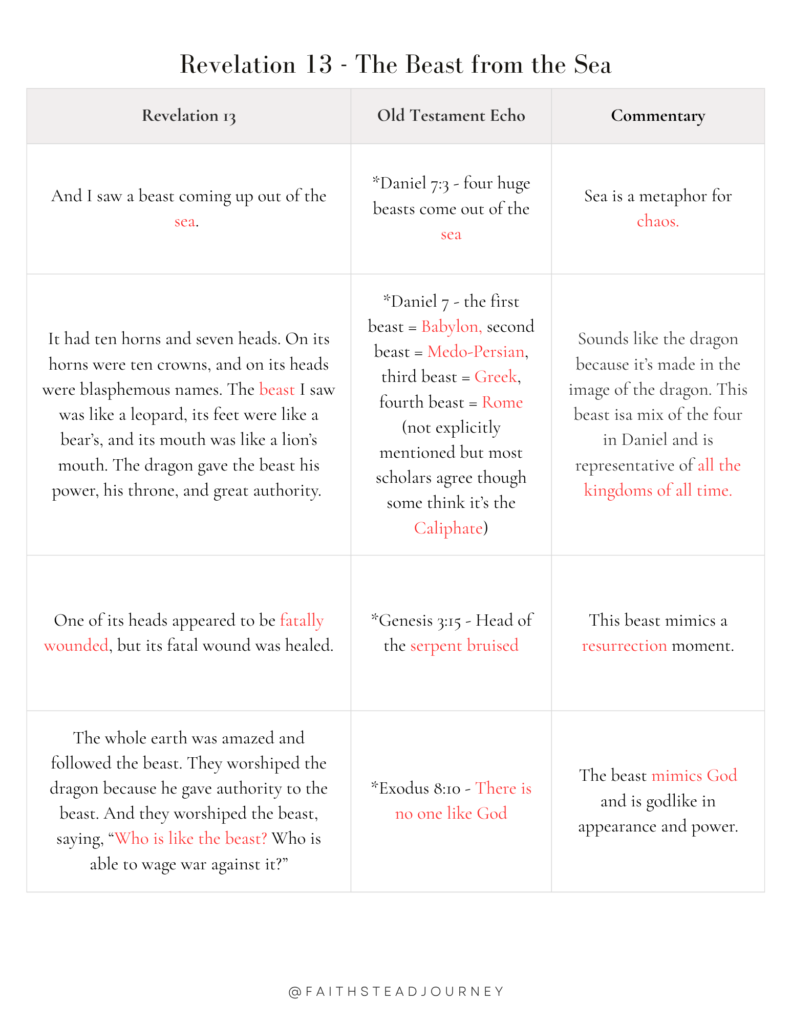
The Second History – The Beast from the Sea
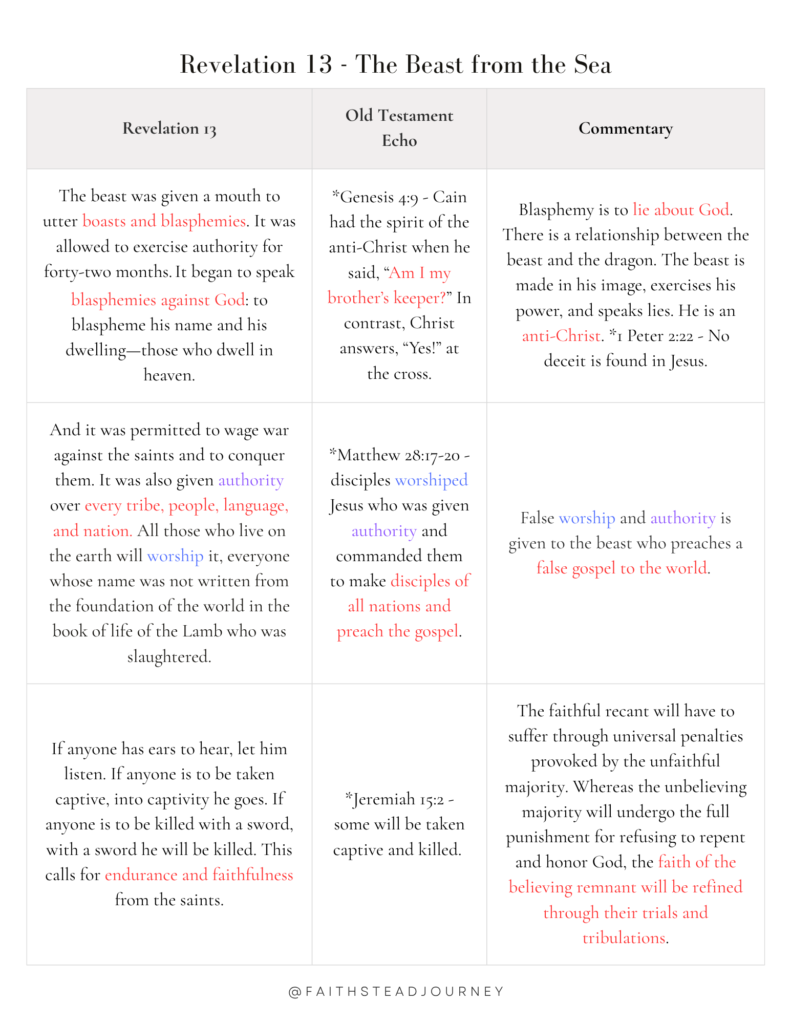
The Third History – The Beast from the Earth
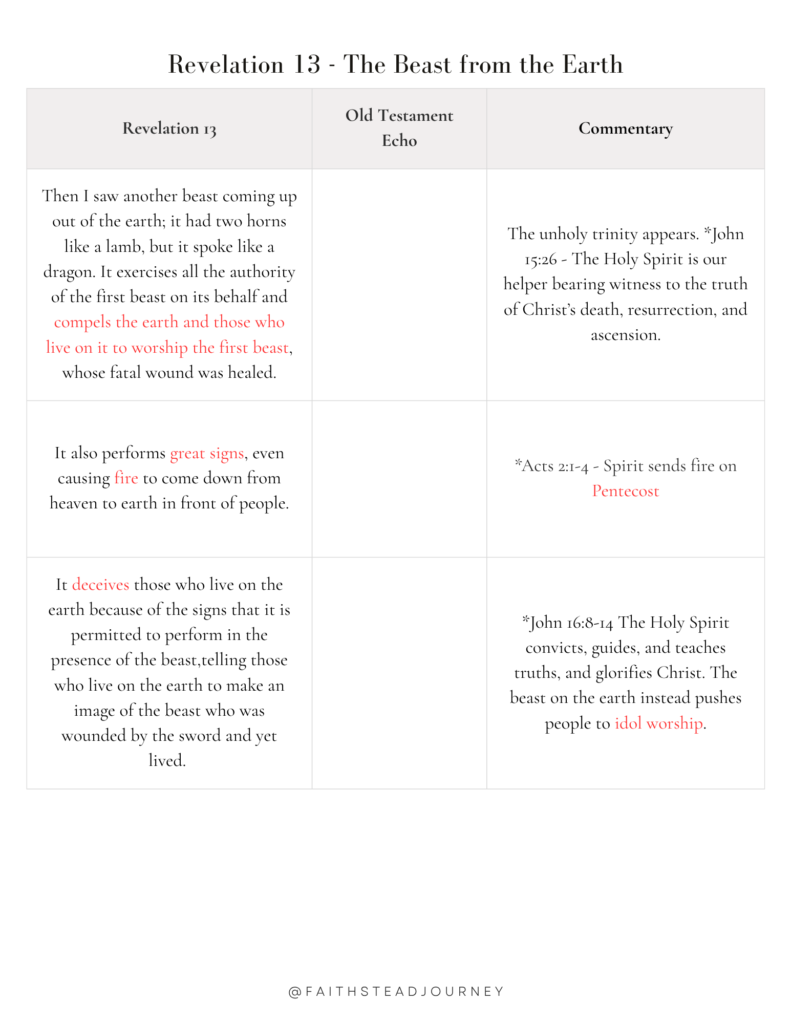
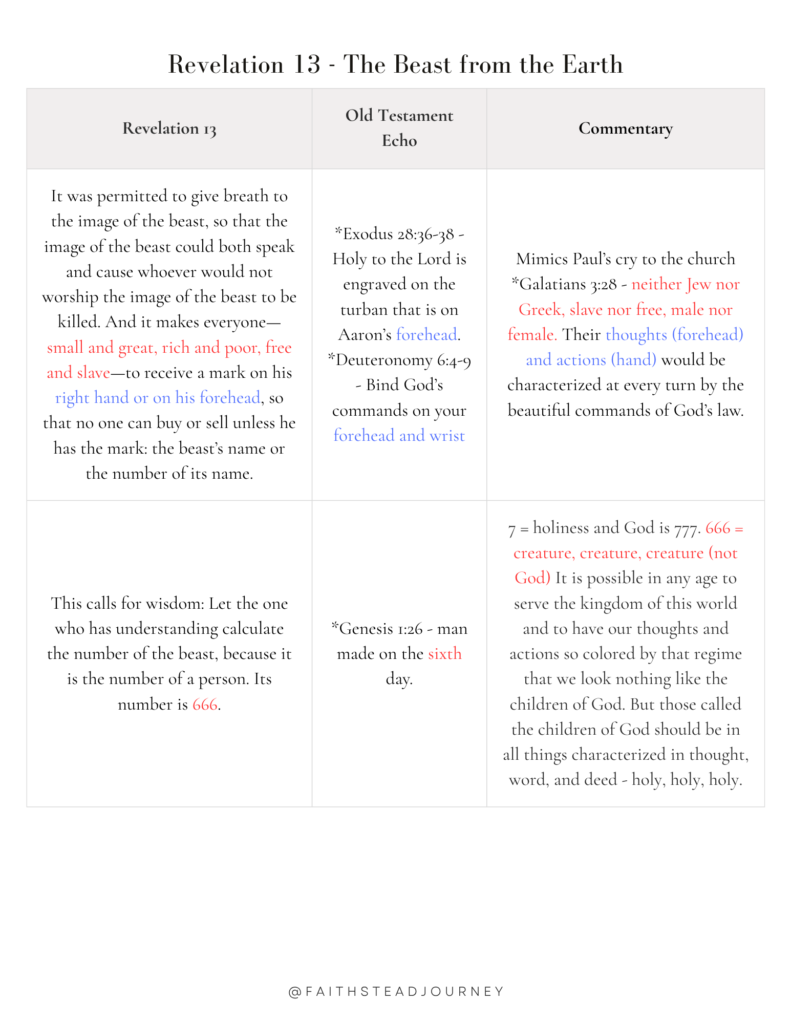
One of the things I found most fascinating is that there truly is nothing new under the sun. Satan never creates anything original—he only counterfeits what God has already established.
Revelation 12–13 presents an unholy trinity that mirrors the work of the Holy Trinity. Just as the Father sends the Son and the Holy Spirit bears witness to the Son, the Dragon empowers the Beast from the Sea, and the Beast from the Earth (the False Prophet) points the world to worship the Beast.
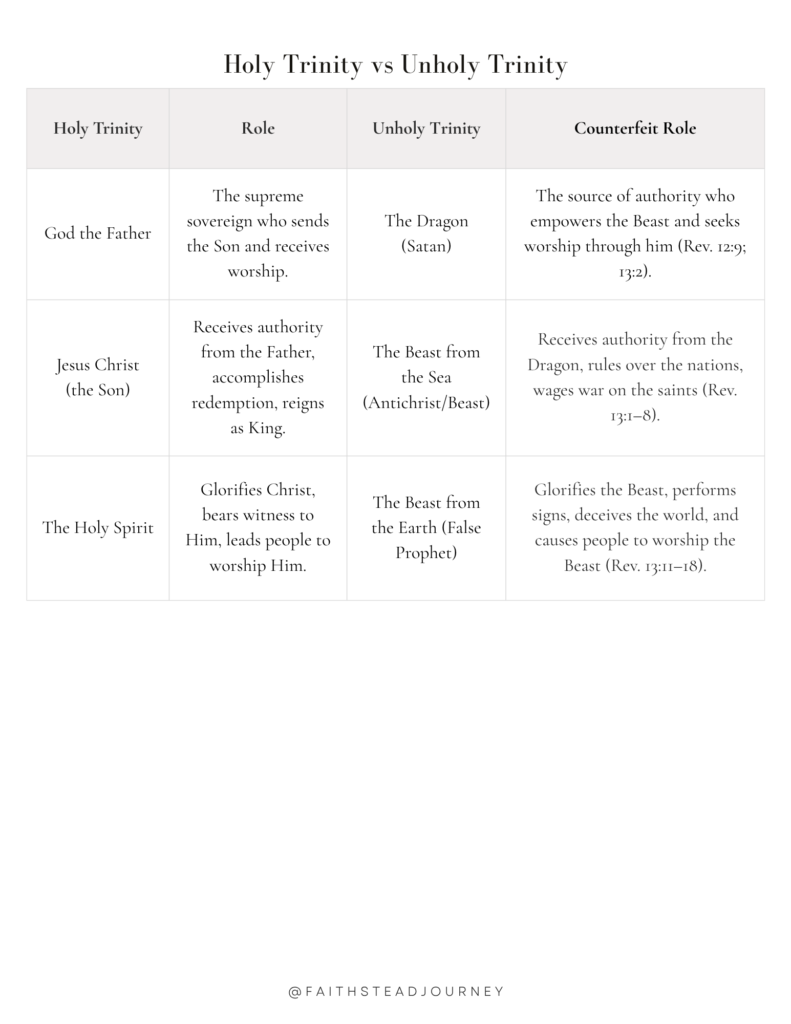
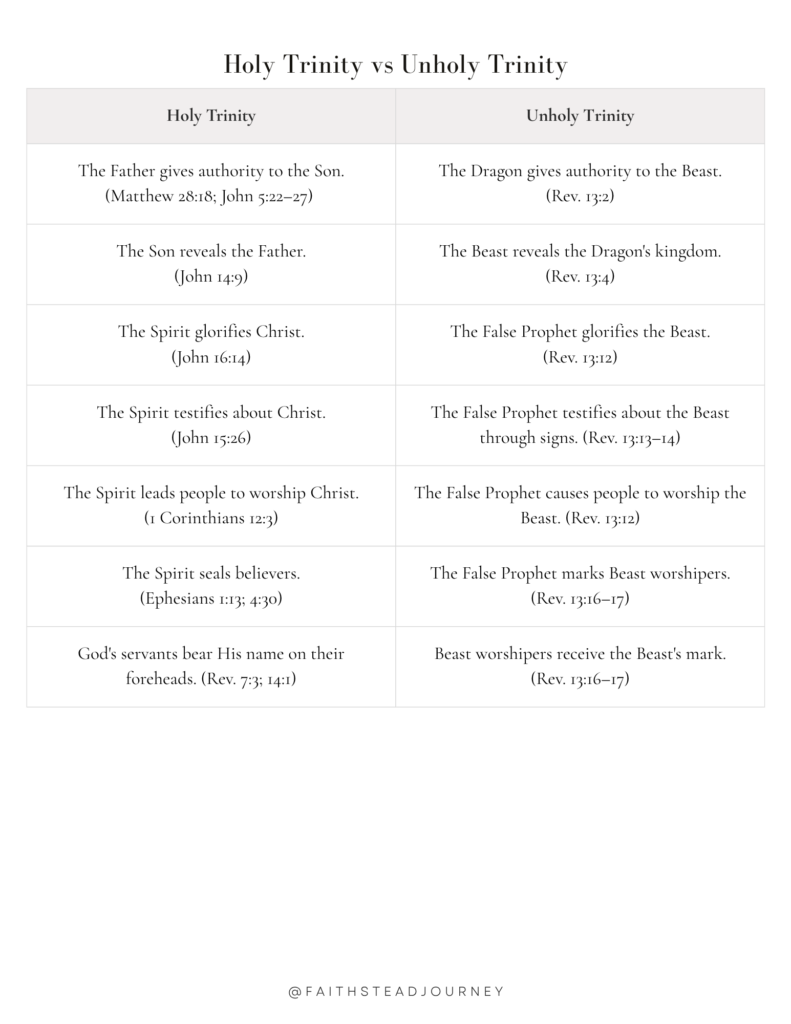
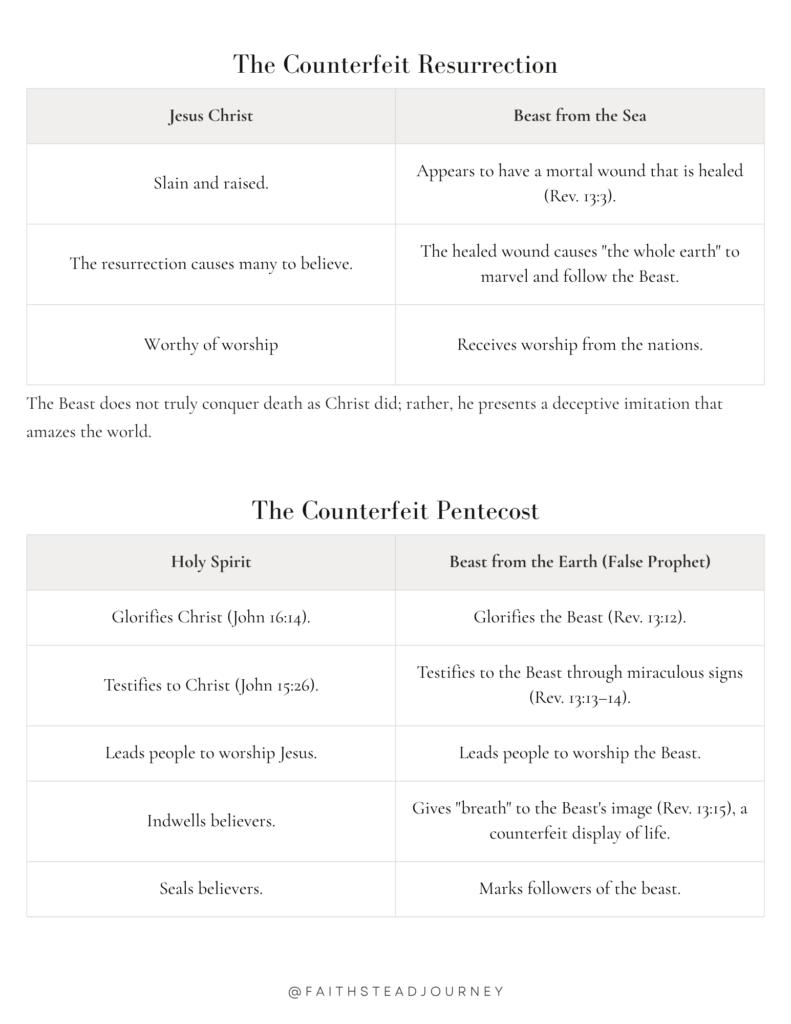
This pattern echoes throughout Revelation:
- Christ has a Bride; the Beast has a prostitute.
- God seals His people; the Beast marks his followers.
- Christ has faithful witnesses; the Beast has a false prophet.
- The Lamb receives worship in heaven; the Beast receives worship on earth.
- The New Jerusalem descends from heaven; Babylon falls under judgment.
Throughout the book, John continually places before us two kingdoms, two allegiances, and ultimately two objects of worship. Every person must answer the same question: Will I worship the Lamb or the Beast?
The Fourth History – The Lamb and the 144,000
John sees the redeemed standing with the Lamb, bearing the Father’s name on their foreheads. They have remained faithful, refusing spiritual adultery with the world, and they follow the Lamb wherever He goes. A new song rises from their lips before God’s throne, and like their Savior, no deceit is found in their mouths.
The Fifth History – The Proclamation of the Three Angels
First Angel – Proclaims the eternal gospel to every nation, tribe, language, and people. This is God’s final call to repentance.
Second Angel – Announces the fall of Babylon the Great.
Third Angel – Warns that all who worship the Beast will drink the wine of God’s wrath and find no rest. In contrast, those who faithfully endure in Christ will finally rest from their labors.
Jen Wilkin makes an insightful observation here: the gods of the city of man always demand more work but never offer true rest. They promise fulfillment yet leave us exhausted. God, however, not only gives rest—He commands it. The Sabbath reminds us that our worth is found not in endless striving but in belonging to Him.
The Sixth History – Reaping the Earth’s Harvest
First Harvest – The Son of Man reaps the ripe harvest of the earth, gathering His redeemed.
Second Harvest – An angel gathers the grapes of the earth and throws them into the great winepress of God’s wrath, portraying the judgment of the unrepentant.
The Seventh History – Preparing for the Bowl Judgments
As with every previous cycle of seven, this section prepares us for what comes next: the seven bowls and the completion of God’s righteous judgment.
And just as the cycles of the letters, seals, and trumpets all conclude by drawing our attention back to God’s throne, this section does the same.
“I also saw something like a sea of glass mixed with fire, and those who had won the victory over the beast, its image, and the number of its name, were standing on the sea of glass with harps from God. They sang the song of God’s servant Moses and the song of the Lamb…” — Revelation 15:2–4
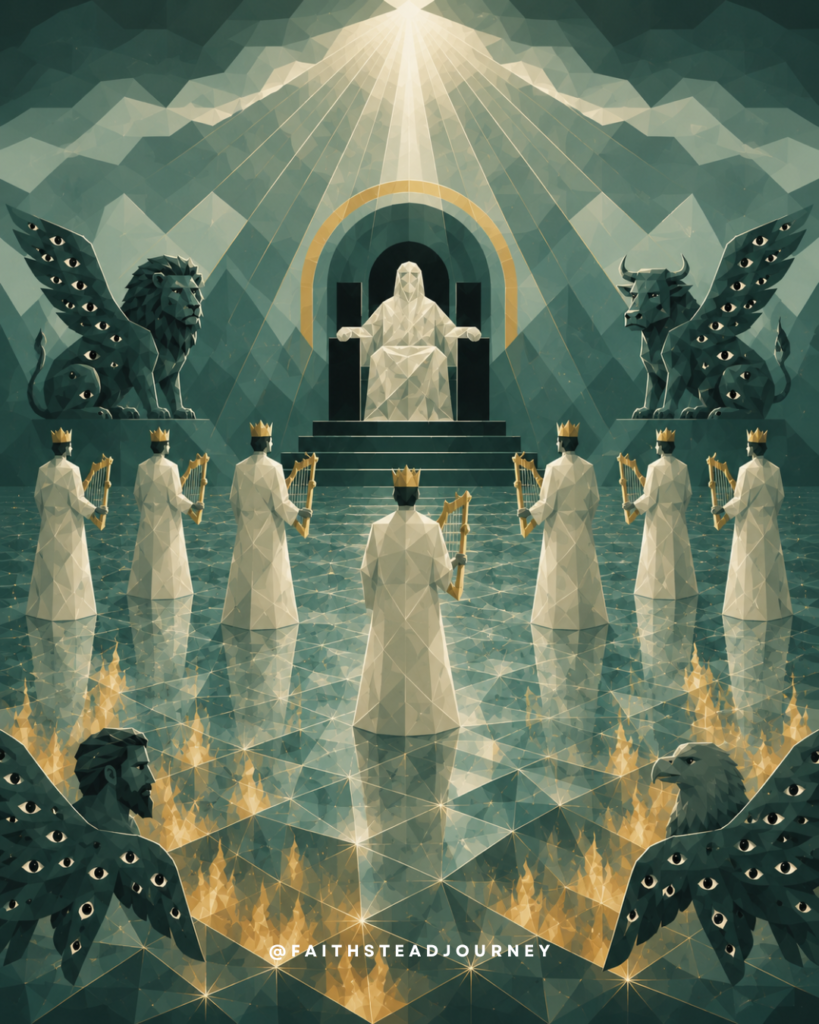
This time the sea of glass is mixed with fire. The image recalls both deliverance through the Red Sea and the refining fire of God’s people. Those standing on the sea have passed safely through suffering, persecution, and even death itself.
It also brings to mind Matthew 14, when Jesus walked upon the stormy sea. For many years I read this story primarily as a miracle—Jesus proving His divinity by walking on water—and as a lesson about Peter’s faith. Was Peter courageous? Did he have little faith? Those are certainly part of the story, but there is an even richer biblical theme unfolding.
Throughout Scripture, the sea often symbolizes chaos, evil, and the untamed forces that oppose God’s order.
With that background in mind, Matthew 14 takes on new significance.
Jesus doesn’t merely walk on the water—He walks over the very thing that symbolizes chaos, fear, sin, and death. The storm is still raging. The disciples are terrified. Yet Jesus calmly treads upon what threatens to destroy them. In doing so, He reveals that the forces which overwhelm humanity are completely beneath His feet.
When Peter steps out of the boat, he is invited to participate in that victory. As long as his eyes remain fixed on Jesus, he too walks over the chaos. But the moment he shifts his gaze to the wind and waves, fear overtakes faith, and he begins to sink. Even then, Jesus immediately reaches out His hand and pulls him to safety. Peter’s rescue doesn’t ultimately depend on the strength of his grip on Christ, but on Christ’s grip on him.
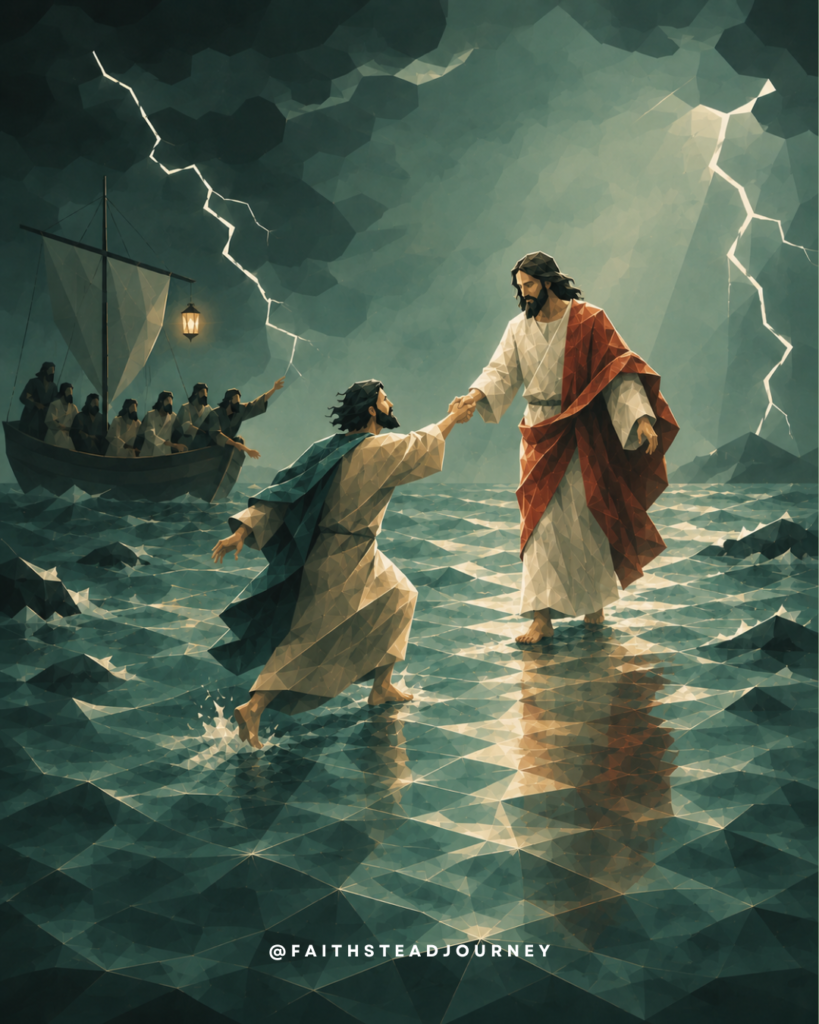
This imagery echoes beautifully in Revelation. Those who have overcome the Beast are not struggling to stay afloat—they are standing securely on the sea of glass singing the song of Moses and the song of the Lamb.
What a picture of our hope! Christ has already walked through the waters of chaos. He passed through death itself and rose victorious. Because He conquered, those who belong to Him will also pass safely through every trial, every persecution, and even death itself. The storms may still rage around us, but they will never reign over us.
I think that’s the encouragement John wants his readers—and us—to take away.
Wrap Up
Lastly, I want to tie everything together because, when reading Revelation, so much is happening that it’s easy to lose sight of the overarching story. Revelation 12–15 is not a collection of unrelated visions but seven interconnected histories that reveal the cosmic conflict between Christ and Satan from different perspectives. Together, they show the rise of the dragon’s kingdom, God’s preservation of His people, His final call to repentance, and the certainty of His coming judgment.
The Seven Histories
- The Conflict Begins (The Woman, the Child, and the Dragon) — The origin of the spiritual battle and Satan’s failed attempt to destroy the Messiah.
- The Dragon’s Kingdom (The Beast from the Sea) — The dragon empowers a worldly kingdom that persecutes God’s people.
- The Dragon’s False Prophet (The Beast from the Earth) — Deception and false worship lead the world to follow the beast.
- Christ’s Faithful People (The Lamb and the 144,000) — In contrast to the beast’s followers, Christ preserves a redeemed people who remain loyal to Him.
- God’s Final Warning (The Three Angels) — A universal call to worship the Creator, reject Babylon, and endure faithfully.
- The Final Separation (The Harvest of the Earth) — Humanity is divided once and for all as the righteous are gathered and the wicked face judgment.
- Heaven Prepares for Judgment (The Temple and the Seven Bowls) — Heaven opens, and everything is set in motion for God’s final outpouring of righteous judgment.
I especially like how these seven histories alternate between exposing Satan’s counterfeit kingdom (chapters 12–13) and revealing God’s sovereign response (chapters 14–15). Rather than presenting a strictly chronological sequence, they give us a panoramic view of the same great conflict, culminating in the assurance that the Lamb will ultimately triumph.
I’ve compiled all of my Revelation Reloaded reflections into one PDF so you can read through them in one place, revisit them as you study, or keep them alongside your Bible as you journey through Revelation for yourself.