There is something deeply special about opening God’s Word with your children. You’re sharing what you love most with the people you love most.
Over time, it becomes more than just teaching—it becomes fellowship. As they grow, you begin to walk side by side, learning, asking, and beholding God together.
And in that shared love for Him, something beautiful forms—a bond, a closeness, a kindred connection rooted in truth.
They’re not just your children… they are your brothers and sisters in Christ.
Bible study is the very first thing we do each day in our morning basket.
If you’ve never heard of a morning basket, it’s simply a small collection of subjects you do together as a family before everyone moves on to their individual schoolwork. It’s one of my favorite parts of our day.
For us, we always begin with Scripture.
We read the Bible (or do a Bible study), and then we pray—often incorporating what we just read into our prayers. It’s a simple rhythm, but it’s been really meaningful for our family.
📖 One Resource We’ve Used Consistently: The Bible Recap
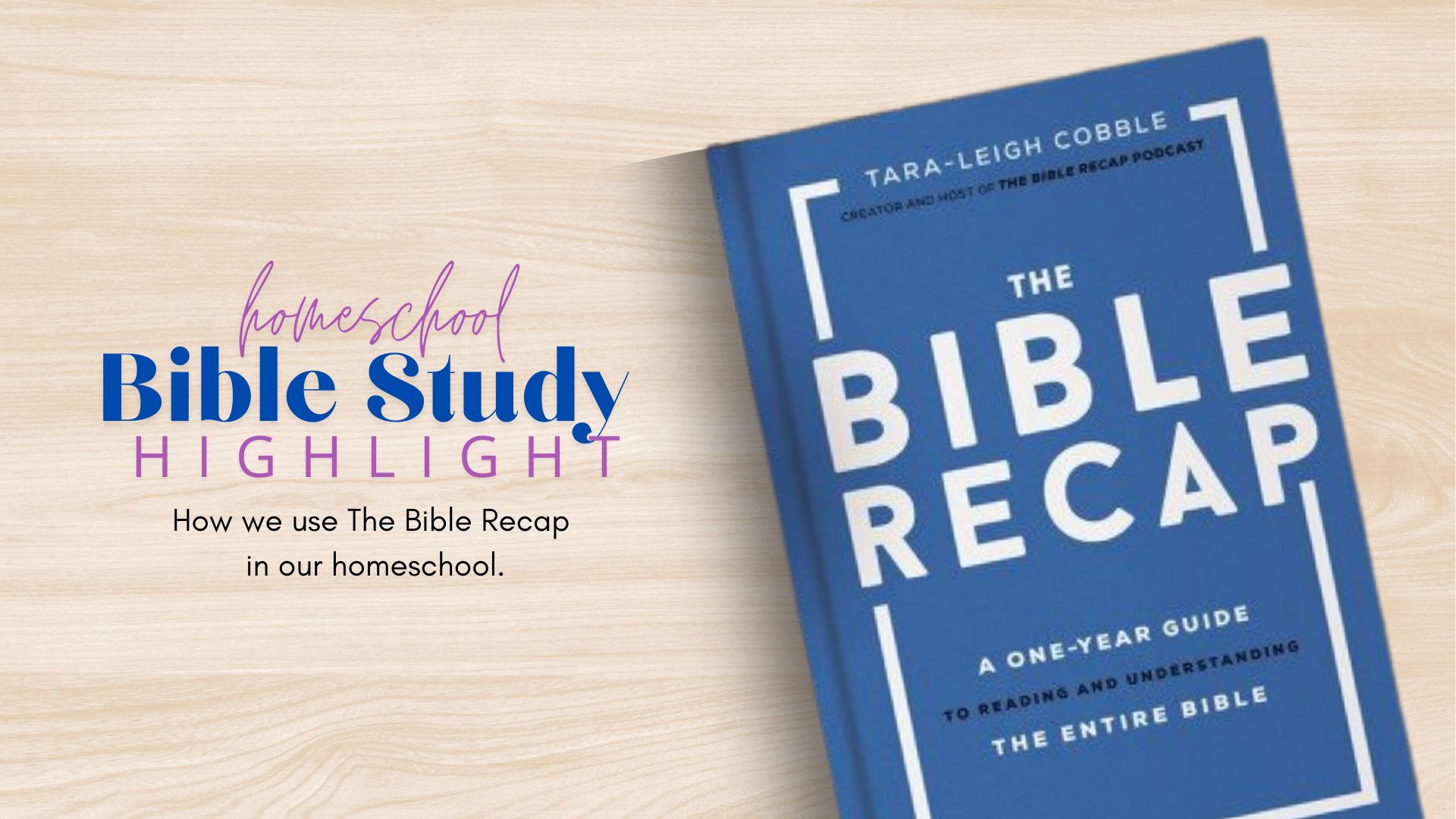
One of the main resources we’ve used over the past few years is The Bible Recap.
Reading through the entire Bible in a year is such a meaningful goal. We started when my daughter was 9 and my son was 12, and now we’re in our third year.
It’s become a sweet family tradition—one I hope we continue while they’re at home, but also one they’ll carry with them into adulthood and, Lord willing, pass on to their own families.
⏰ What It Looks Like Practically
Each day includes:
- About 20 minutes of Bible reading
- Plus 7–10 minutes of the recap
So altogether, it’s roughly 30 minutes.
👶 What About Younger Kids?
For younger kids who can’t sit still the whole time, I suggest giving them something quiet to do with their hands so they can still listen. The Bible Recap even has a Kid’s Devotional geared for ages 6-8.
There’s now a version called The Bible Recap for Kids, which is geared toward ages 8–12.
That said, my daughter actually started the adult version at age 10, so it’s definitely doable—especially if you have older siblings helping set the pace.
Here’s how I tend to think about it:
- If all your kids are younger (under 12) → the kids version is a great place to start
- If you have a mix of ages, especially a teen → I would lean toward the adult version
In our home, I often “level up” rather than simplify.
🧠 A Note on “Leveling Up”
In homeschooling, Charlotte Mason emphasized not dumbing down content for children.
And I’ve found that to be true.
Kids are often capable of understanding far more than we expect—especially when they’re exposed to rich, meaningful content over time. And because we’re reading through Scripture year after year, that repetition really helps deepen their understanding.
Of course, every child is different. Some are ready earlier, some need more time. You can always adjust based on your own kids.
🔄 How We’ve Done It Over the Years
Each year has looked a little different for us:
Year 1:
- Sat together at the table
- Listened to the audio while reading along
- Used the NLT version
- Watched the recap video together
Note: You could take turns reading the Bible passages, which would be wonderful—but since kids are slower readers and we wanted to keep this a daily habit, we ended up mostly just listening. It’s also super helpful during the genealogies, when it’s tricky to pronounce all the names!
Year 2:
- Same rhythm, but we used ESV
Year 3:
- Mostly audio, often in the car
- Life is busier, especially with a high schooler
- Some days we listen to two or even three days if we know we won’t be going out for a few days.
Living a bit further from town means longer car rides for us, but we’ve come to see that as a gift—it’s become one of our sweetest times to listen together.
🚗 Giving Yourself Flexibility
There are days we’re busy or off schedule and we may only listen to the Bible and not the recap afterwards and that still counts.
Some days we discuss what we listened to. Some days we don’t.
When we start a new book of the Bible, we’ll watch an overview from The Bible Project, which has been really helpful for context.
But it’s completely optional.
🤍 What Matters Most
The goal isn’t perfection.
It’s consistency.
We read.
We listen.
We come back again the next day.
And over time, that steady rhythm adds up to something really meaningful.
🌿 Final Thought
I’ve never really thought of The Bible Recap as a homeschool resource, but over time I’ve realized how foundational it’s been for our understanding of Scripture.
When you read through the Bible in a year, you begin to see the bigger picture—the metanarrative of Scripture. You spend enough time in each passage to understand the stories well, but not so long in one place that you lose sight of the whole. It helps you see the Bible as one unified story.
I’ve also found Tara-Leigh Cobble’s commentary incredibly helpful. It’s relatable for those new to the Bible or with common questions, but she also touches on deeper, more complex topics, which makes it valuable for listeners of all ages. She even has another podcast, The Bible Recap Deep Dive, where reader questions are explored in more depth—perfect if you want to go further.
The show notes include additional resources and readings too, which often spark conversations with my kids. I’m learning, they’re learning, and together we’re discovering something new and wonderful about God every day.
And the best part… this has helped us discover that He’s where the joy is.