Whose Coin?
The crowd’s murmur shifted like a restless tide. Whispers carried suspicion and fear, and eyes darted nervously between the men in flowing robes and the armored soldiers stationed at every corner. Something was about to happen. Everyone could feel it.
Amid the tension, Jesus stood perfectly still. His calm seemed almost daring. The Pharisees leaned in, eyes sharp and probing, while the Herodians lingered close, twisting their lips into thin, calculating smiles.
“Teacher,” they began, their voices careful but edged with challenge, “we know you are a man of honor. You speak the way of God truthfully. You do not let anyone—no matter how powerful—tell you what to say or do. Now, tell us: is it right to pay the taxes to Caesar, or not?”
The words were like a spark in dry grass. Every Jew around knew the weight behind them. Taxes. The constant reminder that Rome ruled. The coin in your hand could mean the difference between obeying a cruel empire and breaking the law.
Jesus glanced at the coin someone had handed Him. The small silver gleamed, catching the sun in quick flashes. “Whose picture is this and whose words?” He asked.
“Caesar’s,” someone replied.
Then Jesus’ words cut through the tension: “Render to Caesar the things that are Caesar’s, and to God the things that are God’s.”
The crowd fell silent, captivated. Some nodded slowly, amazed at the wisdom in His words. Others furrowed their brows, expecting anger or a fiery outburst—but instead, they could only marvel. Every word seemed to shine with brilliance, leaving no room to argue, no way to deny His insight.
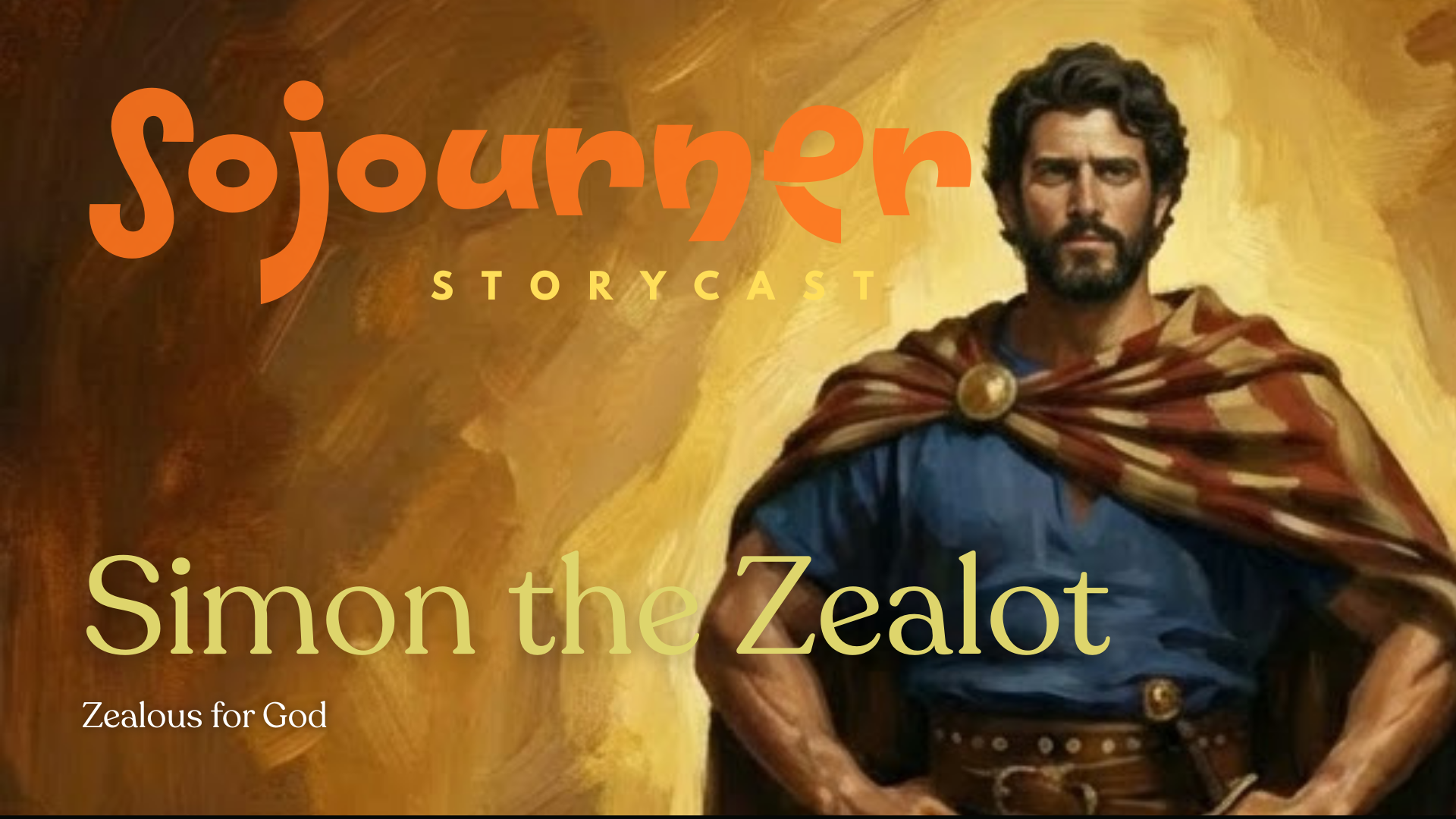
Simon the Zealot stood among the crowd, a devoted follower of Jesus. In his past life, he had fought with swords and anger, but after following Jesus he had learned to put those ways behind him. Still Jesus’ wisdom and ways never failed to amaze him. This was a new kind of battle—fought with courage, truth, and love—and Simon could feel its power and purpose stirring deep in his heart.
Who Was Simon the Zealot?
Have you ever wondered what life was like in first-century Israel when Jesus walked the earth? Jesus came at a time of turmoil, when life was not easy for the Jews. They had been conquered by the Roman Empire, which meant that apart from trying to make a living for themselves, they also had to give some of their hard-earned money to Caesar. This made many people frustrated and angry. The Jews believed that God had promised a Messiah—a Savior—who would set them free, and they longed to be a free people again.
At that time, there were several notable groups of Jews who had very different ideas about how this freedom would come. The first group were the Pharisees, who believed the Messiah would only come if they obeyed all of God’s laws very closely. They put a lot of effort into learning the Law and teaching others to do the same. The second group were the Sadducees, the wealthier, more powerful ruling class who often worked with the Romans to maintain peace and keep their positions of influence. The third group were the Herodians, they were named after King Herod, whom they supported, and often aligned with Roman authority to protect their political power. Finally, there were the Zealots, passionate patriots who believed that Israel’s freedom could only come through rebellion, even violence, against the Romans.
Now that we know a little about the different groups of Jews living in first-century Israel, let’s take a closer look at Simon the Zealot. The Bible doesn’t tell us much about him—there are no recorded stories of what he said or did—but it does tell us two important things: first, that Jesus personally chose him to be one of the twelve apostles, and second, that he was called a Zealot.
So what does that mean? Zealots were a passionate group of Jews who were willing to fight to free themselves from Roman rule. Their name basically means “enthusiast” or “someone who is fully devoted,” but in practice, their devotion often led them to anger, conflict, and even secret attacks on Roman officials.
Some stories from history show just how intense the Zealots could be. Around 6 AD, not long after Jesus was born, the Romans conducted a census meaning they counted everyone in the land and made the people of Judea pay taxes. A man named Judas of Galilee refused to pay taxes. He led a revolt, telling the Jews that only God—not Caesar—was Israel’s true ruler. The Bible doesn’t give us many details about him, but the famous historian Josephus describes Judas as “zealous or passionate for the law.” Later, the rebels who followed his teachings became known as the Zealots, which is why historians often call Judas of Galilee the first Zealot.
So when the Bible calls Simon a zealot, most scholars believe he may have been part of that movement before following Jesus. That means he was likely used to fighting for Israel’s freedom with passion, bold action, and even anger.
Different Kinds of Disciples
If this was the case, why do you think Jesus would choose someone like Simon the Zealot to follow Him? Think about it—Simon was probably dangerous, full of anger, and ready to fight for Israel with swords if he had to. It’s kind of like picking the school bully who beat people up to be on your team. But that’s exactly what Jesus did.
Something cool about Jesus is how He called all kinds of disciples. He didn’t just pick people who were “safe” or “perfect.” He chose fishermen who spent most of their days smelling like fish, a tax collector who worked for the enemy, and a Zealot who hated the Romans with all his heart. These men were completely different from each other—and yet, after following Jesus, they had to learn how to work together.
In fact Matthew the tax collector and Simon the Zealot were from completely different worlds. Matthew worked for the Romans while Simon worked against the Romans. They all had to learn a whole new way to live, love, and fight—not with swords or revenge, but with courage, truth, and love. Jesus didn’t just accept them as they were; He transformed them, showing that even the most passionate, dangerous, or unlikely people can be part of God’s team—and that their energy and passion can be used for something greater than themselves.
A Trick Question
Now let’s go back to the story at the beginning of this podcast. The Pharisees and Herodians were jealous of Jesus—so many people were listening to Him and following His teaching, and they didn’t like it. They wanted to trick Him into saying something wrong so that the crowd would stop following Him.
They asked Him a tricky question about paying taxes. They knew the Jews hated the Romans and would be angry if Jesus told them to pay taxes to Caesar. But they also knew that if He told the people not to pay, they could accuse Him of being a Zealot—a rebel trying to overthrow Rome—and the Roman soldiers would come and arrest Him. No matter what answer He gave, they thought it would get Him into trouble.
But Jesus outwitted all of them. He didn’t side with Rome, and He didn’t rebel against Rome. Instead, He said “Render to Caesar the things that are Caesar’s, and to God the things that are God’s.” Render is just a fancy word for give. Jesus was saying, If the coin has Caesar’s image stamped on it, then it belongs to Caesar. So give it back to him. He gave an answer that was simple, but incredibly powerful.
Faith and Civic Duty Don’t Clash
Jesus shows us that following God and living under the government doesn’t clash. The coin had Caesar’s image on it. That meant it belonged to the Roman system. So yes—paying taxes was part of living in that society. Jesus didn’t deny that earthly governments have real authority. In fact, Scripture teaches that God is sovereign over rulers and is the One that even allows them to rule (Romans 13). Kings, presidents, governors—all of them ultimately answer to God.
So Jesus wasn’t saying, “Ignore government.”
But He also wasn’t saying, “Worship government.”
He was teaching that earthly authority has a rightful place—but it is not ultimate. And that’s the brilliance of Jesus’ answer. The Pharisees and Herodians thought they had Him cornered, trapped between rebellion and compromise. They were sure whichever way He answered, He would lose.
They came to stump Him… and instead, He stumped them. And the crowd could see it and marveled.
As Christians, we can care about laws, justice, and our communities. We can vote, serve, speak truth, and work for good in the government. But we don’t panic when politics get messy, and we don’t put our hope in political victories. Why? Because Christ is already King.
Our faith shapes how we live as citizens—but our hope rests in something higher.
We’ve already talked about several groups in first-century Israel—the Pharisees, the Sadducees, the Herodians, and the Zealots. But there was another group too: the Essenes.
The Essenes looked at the corruption of Jerusalem, the compromise with Rome, and the fighting in the streets—and they basically said, “We want no part of this.”
Instead of trying to reform the system like the Pharisees…
Instead of working with Rome like the Sadducees and Herodians…
Instead of fighting like the Zealots…
They withdrew.
Many of them moved out into the wilderness, forming quiet communities near places like the Dead Sea. They focused on prayer, strict obedience to God’s law, ritual purity, and waiting for God to act. And if you’ve heard of the Dead Sea Scrolls, scholars believe the Essenes may have been the ones to write them.
In today’s world, we might say they “checked out” of culture. They believed the world was too corrupt to fix, so the faithful thing to do was separate from it completely.
A Higher Allegiance
Christians aren’t called to withdraw from the world. And we’re not called to be consumed by it either.
We live in two realities:
We are citizens of an earthly country.
But we are citizens of heaven first.
It means we can and should engage in civic life and politics with wisdom and integrity—but we remember that government does not save the world. Only Jesus can. Making good laws is good, but good laws doesn’t create good people. Only Jesus’ love and the gospel can change people’s hearts to be renewed and good.
God’s kingdom doesn’t advance by force or control. It advances through changed hearts and faithful obedience.
We Bear God’s Image — So We Belong to Him
So what Jesus said next is even more important, He said render to God what is God’s. The coin they gave Jesus belonged to Caesar because it had his image on it. But whose image is stamped on you?
Genesis tells us that human beings are made in the image of God. That means you reflect Him. You were created by Him and for Him.
So when Jesus says, “Render to God what is God’s,” He isn’t just talking about money. He’s talking about you as a person. Your thoughts. Your loyalty. Your heart.
If a coin with Caesar’s face belongs to Caesar, then a person with God’s image belongs to God.
Caesar may stamp his image on coins… but God has stamped His image on you. And that means your life belongs to Him. That’s the brilliance of Jesus’ answer— he didn’t pick Team Rome or Team Jews. He picked team God. God’s kingdom comes first.
Before we decide how we feel about leaders or laws…
Before we argue about our favorite sports team…
Before we defend our favorite singer, brand, YouTuber, or even our school…
We ask:
What does God want?
What honors Him?
What shows His truth and love?
We can enjoy teams, music, hobbies, and even care about our country. But Jesus reminds us: none of those things are our true King. Our identity isn’t found in a political party, a football team, a music artist, a clothing brand, or even a school mascot.
It’s found in Christ.
That means everything else—our opinions, our hobbies, our friendships, our citizenship—flows from belonging to God first.
In other words:
We don’t start with what we like and then try to squeeze God into it.
We start with God… and let Him shape how we live.
Because the image on a coin shows who it belongs to.
And the image on you shows who you belong to. And you belong to Christ.
Why Simon the Zealot’s Story Still Matters Today
God Transforms People
Simon might have been part of the zealots who were used to fighting in his former life, but following Jesus changed him.
Our Identity Is in Christ
Even if Simon had once been fierce with swords and anger, God’s image on him gave him a new identity—one defined not by his past, but by Christ and His kingdom.
God’s Kingdom Isn’t Spread Through Force, but Through the Gospel Changing Hearts
Jesus also showed Simon that real change doesn’t come through force, but through truth, love, and sharing God’s Word. It’s God who can change a person from the inside out.
Key Scripture
Genesis 1:27 says that God created man in his own image, in the image of God he created him; male and female he created them.
Have you ever noticed how some toys or shoes have a little logo on them? That logo tells you who made it. It shows the maker’s mark.
When God made people, He placed His “maker’s mark” on us. That mark is His image. It means we were designed to reflect what He is like — to love, create, think, and care.
Simon may have thought the most important thing about a person was whether they were loyal to Israel. But the Bible says the most important thing is that every person bears God’s image.
God Gives Wisdom
Wow… that was a lot of deep wisdom for young minds. But I know something about God and His ways.
God is able to plant tiny seeds in the ground and grow towering trees…
God can take five loaves and two fish and feeds thousands…
God is also very good at growing big truth in young hearts.
So maybe you’re thinking, “I’m just a kid. This feels like big theology for adults.”
But that’s exactly the kind of situation God works in.
He takes what feels small… and grows it.
You don’t have to be old or smart for God to work in you. If God can create the universe out of nothing… He can certainly grow understanding in you.
And that means you are never “too young” for deep truth. The same God who transformed Simon the Zealot is at work shaping you.
Continued Missions
According to some early Christian writings, Simon went on to share the good news about Jesus far beyond Israel. Some traditions say he may have traveled to Egypt and Libya and even up through Spain all the way to Britain. Others say he went as far as Persia (modern-day Iran) to tell people about Christ. Wherever he went, he was remembered as a man of courage, willing to face danger to spread the gospel and like many of the other disciples ended up dying for Jesus.
Whether Simon was ever part of the Zealots who fought against Rome, we can’t be sure. But after following Jesus, he showed great zeal for God’s kingdom and for people everywhere.
If Simon the Zealot’s story encouraged you, share this episode with a friend—so they can be reminded that, no matter our past or our passions, we all bear God’s image and belong to Him.
Also, if you want to dive deeper, you can download a free episode companion guide that includes a mini devotional, fun activities, and other topics related to Simon. You’ll find the link below in the show notes.
And remember… who you are isn’t decided by what you do, what you like, or what anyone else says about you. Your true identity is in Christ. God’s image is stamped on you, and that means you belong to Him—first and always.
Links to podcast: