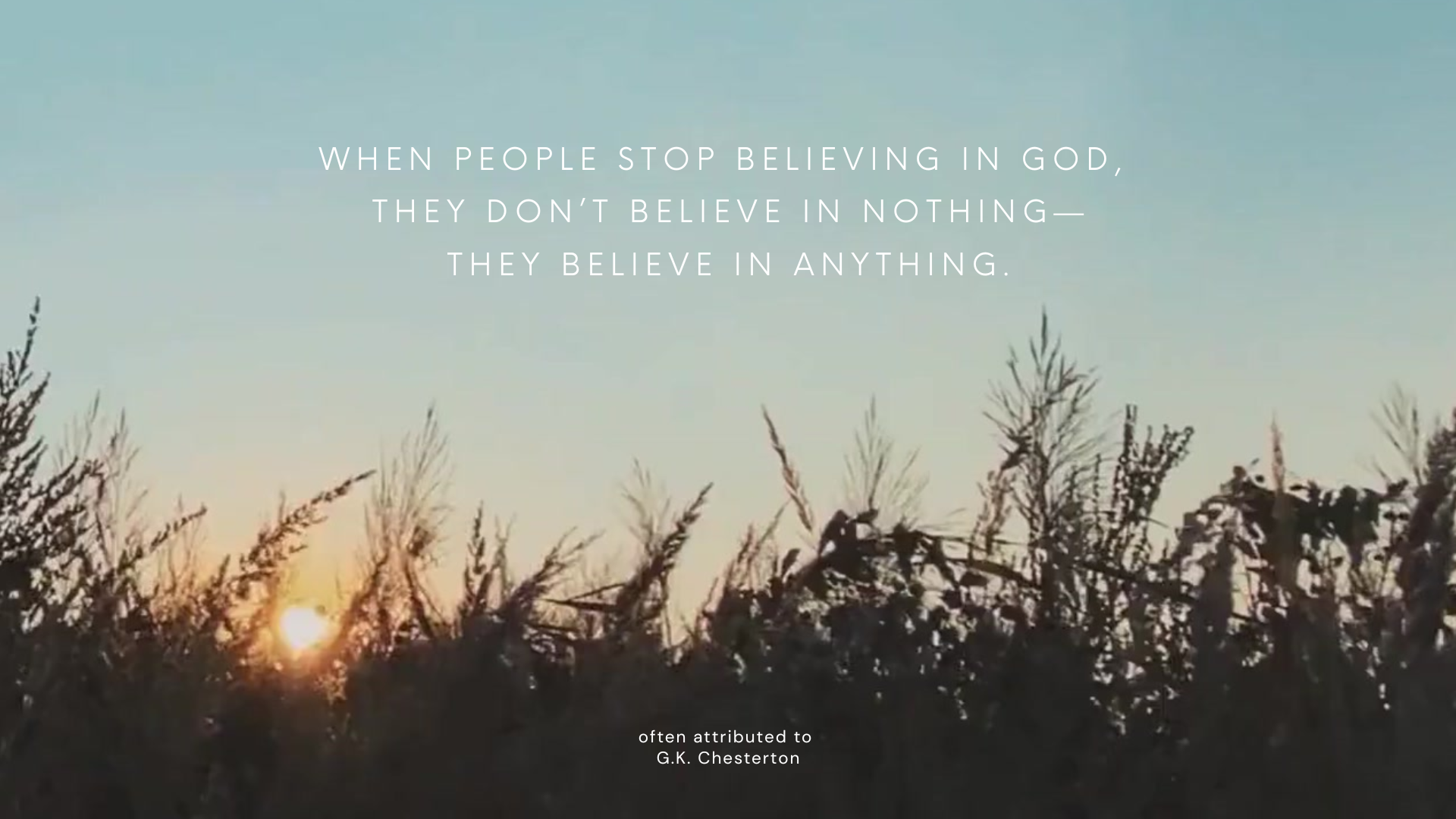
When people stop believing in God, they don’t believe in nothing—they believe in anything.
often attributed to G.K. Chesterton
Lately, I’ve noticed how often neutrality is praised as kindness. We’re told that the most loving thing we can do is stay quiet, avoid strong claims, and let everyone decide truth for themselves. If something might hurt feelings, we’re encouraged to soften it—or leave it unsaid altogether.
But I’m beginning to wonder if silence is really as kind as we think.
There are many places in life where neutrality wouldn’t feel loving at all. We wouldn’t have children and refuse to tell them who their parents are, hoping they’ll “figure it out” someday. We wouldn’t withhold their name, their story, or their belonging in the name of tolerance. Instinctively, we understand that love includes clarity.
So why does that instinct seem to disappear when it comes to God?
If we believe that God is real, good, and loving—if we believe He is our Creator—why would the kindest option be to remain vague about Him?
Sometimes theology and doctrine get a bad reputation, as if they are merely rules imposed or ideas forced. But theology is simply the study of God, and doctrine is simply teaching. At its core, this isn’t about legalistic lifestyles or winning debates. It’s about whether we are willing to tell our children the truth as we understand it.
Children grow best when they know where they come from. Roots matter. Identity matters. A child who knows their origins stands differently in the world. In the same way, when children aren’t taught who God is, they don’t remain neutral. Belief doesn’t disappear—it attaches itself elsewhere.
Without roots or a moral compass, belief becomes untethered. Anything can sound reasonable. Anything can claim authority. Ideas that are contradictory, absurd, or even harmful can begin to feel just as valid as what is good and true—simply because there is no longer a standard by which to discern them.
If we don’t offer truth, something else will quickly offer itself in its place.
Teaching our children about God isn’t about control or fear. It’s about giving them a foundation before they’re asked to build. We’ve been taught—especially as mothers—that love looks like softness, carefulness, and not upsetting anyone. And those things can be good. But somewhere along the way, we began to equate love with withholding clarity, as if naming what we believe to be true is automatically harmful or harsh.
Yet love often shows up as clarity. We name relationships, boundaries, origins, and belonging because love wants the other person to feel secure. Vagueness may feel gentle, but it can leave children carrying questions they were never meant to hold alone.
At the end of the day, the question feels simple, even if the answer takes courage: do we want to tell our children the truth? The truth about God. The truth about who they are and where they come from. Because if we don’t teach them what is true, they will still believe something and it most likely won’t be good, true, or beautiful.
Truth matters.
Rooted for real life.