
The King on a Donkey
The streets of Jerusalem were full of noise and life. People were everywhere—crowds pressed close together, weaving through alleys and marketplaces, all moving toward the city gates. Palm branches brushed against cloaks and hands, and a single cry echoed through the streets: Hosanna!
Thaddaeus walked among them, careful not to be swept away. He had seen many things with Jesus, but this felt different. The city seemed alive with expectation. Cloaks were laid on the road, branches waved in the air. The word Hosanna meant “Save us,” and it carried the weight of longing and hope. Everyone seemed to be waiting—for a kingdom, for deliverance, for something to finally change. Was this the moment when Jesus would prove to everyone that He was the Messiah and save them from Roman rule?
Up ahead, Thaddaeus saw Him.
Jesus rode calmly on a humble donkey, moving forward at an unhurried pace. The colt’s hooves made soft, steady sounds against the stone. Thaddaeus noticed the contrast—the swelling excitement of the crowd and the quiet composure of Jesus. There were no commands, no show of force, no display of power. He passed through the city humbly, just as He always had.
A few days later, Jesus stood before another crowd. The Romans were still in power. The kingdom so many longed for had not arrived in the way they expected. The crowd that once cried Hosanna was now replaced by a crowd chanting, “Crucify Him.” The change was startling. The disappointment was unmistakable. What had begun with hope ended in rejection.
For Thaddaeus, the question lingered. Why would Jesus not prove who He was to everyone? He had seen the miracles. He knew Jesus had the power. Why would He not show it?
Only hours earlier, in a quiet room, Thaddaeus had finally asked that question out loud. And Jesus did answer him—but not in the way Thaddaeus expected. Instead of saying He would prove Himself to the whole world in a big, dramatic way, instead Jesus promised peace to those who loved Him.
Who Was Thaddaeus?
Have you ever wondered:
If God is real… why doesn’t He just prove it?
Why didn’t Jesus come with a royal carriage, fireworks, and a big celebration to show everyone He was God? Then everyone would believe in Him, right?
These aren’t bad questions. In fact, they’re very similar to the question Thaddaeus asked Jesus.
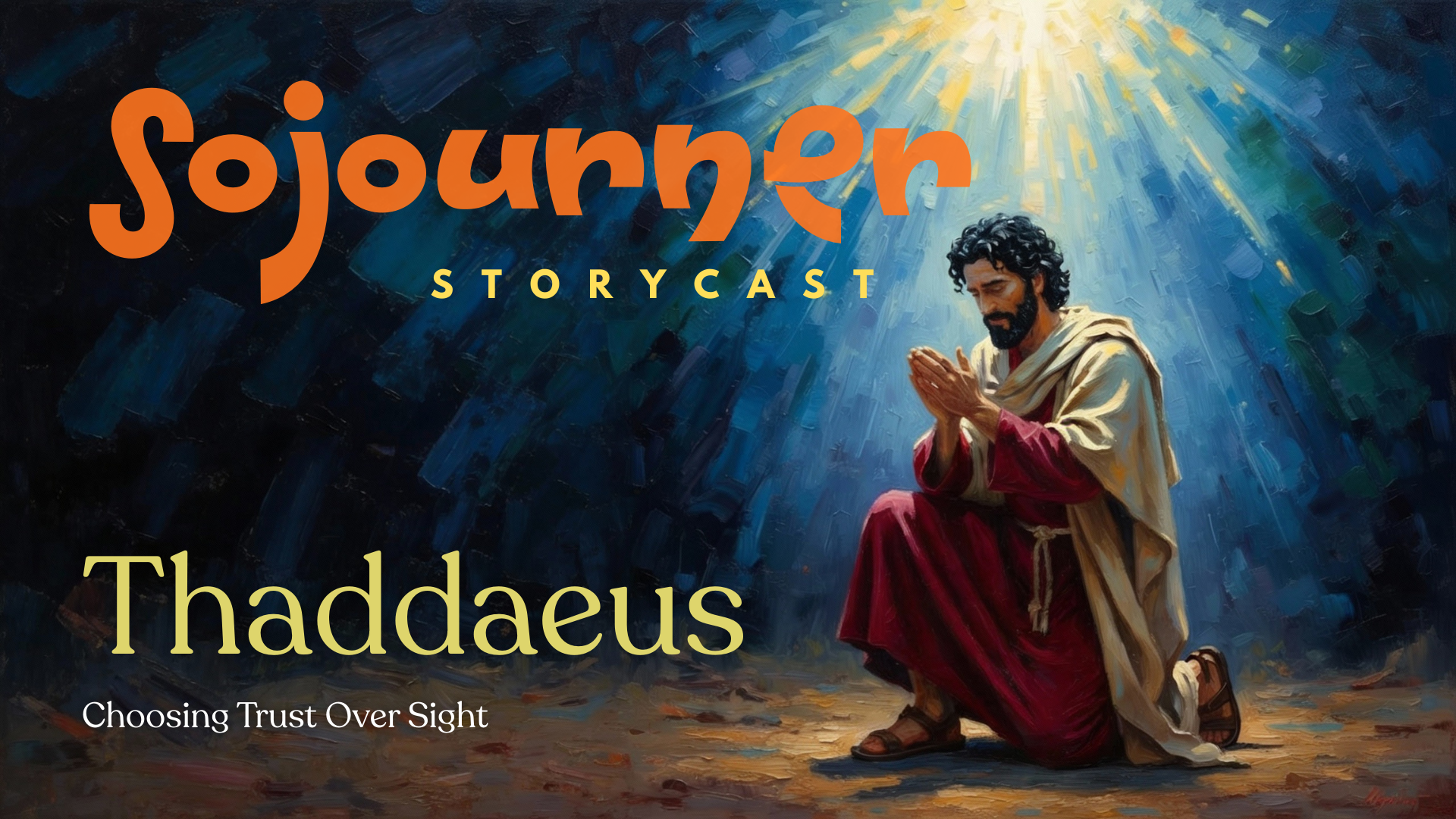
Thaddaeus was one of the twelve disciples that Jesus called to follow Him. You might also hear him called Judas in the Bible. However there was another Judas among the disciples named Judas Iscariot, the one who betrayed Jesus and because we don’t want to get him mixed up with Judas Iscariot so we’ll call him Thaddaeus in this podcast. The Bible tells us his father’s name was James. Thaddaeus isn’t mentioned very often, but he is remembered for asking an important question to Jesus that shows he really wanted to understand Him.
Seeing Isn’t Always Believing
Thaddaeus had seen miracles and he believed Jesus was the Messiah and he wanted everyone else to see the miracles too so that they would believe.
So, on the last night Jesus spent with him, Thaddaeus asked:
“Lord, why do you plan to show yourself only to us? Why not also to the world?” (John 14:22)
He just wanted to understand why Jesus didn’t make it obvious to everyone that He was God. Wouldn’t it be wonderful if everyone believed in Jesus?
Jesus answered in a way Thaddaeus probably didn’t expected. He replied:
“Anyone who loves me will obey my teaching. My Father will love them. We will come to them and make our home with them. Anyone who does not love me will not obey my teaching.”
So what does that mean?
Jesus was saying something really important: seeing Jesus prove He’s God doesn’t automatically make people love or trust Him.
The Bible shows this over and over. In the Old Testament, when the Israelites came out of Egypt, they saw God’s power when He parted the Red Sea and let them walk through on dry ground! But while they were in the wilderness, they disobeyed God over and over. Finally, when God asked them to enter the Promised Land, most of them were afraid and didn’t trust that God would help them. Only Joshua and Caleb believed God would be with them. God called that generation’s fear and rebellion unbelief.
This shows that even when we see God do amazing things, it’s still possible to disbelieve and not love Him.
It’s the same with Jesus. Even if He had done huge miracles that everyone couldn’t deny, it would be like a king holding a sword and forcing people to say, “I love you.” That’s not real love. Love only works when it’s given freely—and God wants our love freely.
Jesus did perform miracles to show He was the Son of God. But not everyone who saw these miracles believed Him. Some people even got jealous or tried to kill Him. That’s why Jesus said that those who truly love Him will obey Him—not because they have to, but because they want to.
Jesus is Gentle
That’s why Jesus came in a gentle way. He didn’t arrive with fancy parades or fireworks—He came as a tiny baby. And when He was on the cross, people mocked Him and wanted Him to come down and show His power to prove He was God—but He didn’t. Jesus is so loving that He doesn’t make anyone love Him or obey Him. He lets each of us choose to love Him back. He wants a real relationship with us, not just people doing what He says because they’re scared.
And that’s why Jesus doesn’t always show Himself in a big, flashy way to the world. But He does show Himself to everyone who loves Him—through His words, His Spirit, and the peace He puts in their hearts. When we choose to follow Him, spend time with Him, and trust Him, we get to experience His love and guidance every day, even when we can’t see Him with our eyes.
Why Thaddaeus’s Story Still Matters Today
It’s okay to ask questions about God.
Thaddaeus wasn’t afraid to ask Jesus something he didn’t understand. Just like him, we can ask God honest questions about life, faith, or even hard things like pain and suffering. Asking questions is part of learning and growing in trust.
Faith isn’t about seeing proof—it’s about love and trust.
Thaddaeus wanted Jesus to show Himself to the whole world, but Jesus explained that real faith comes from loving someone for who they are, not just from seeing miracles. Today, we can learn to trust God even when we don’t see everything clearly.
God is close to those who love Him.
Thaddaeus learned that Jesus’ presence, peace, and the gift of the Holy Spirit were for those who follow Him. This reminds us that God wants a real relationship with us, not just admiration from a distance, and that His peace is with us even in hard or scary times.
Key Scripture
John 14: 26-27 (NIRV) – But the Father will send the Friend in my name to help you. The Friend is the Holy Spirit. He will teach you all things. He will remind you of everything I have said to you. I leave my peace with you. I give my peace to you. I do not give it to you as the world does. Do not let your hearts be troubled. And do not be afraid.
Jesus knew that Thaddaeus and the other disciples would be afraid after Jesus went away so He offered them great encouragement. He promised to send them a special Friend—the Holy Spirit. The Holy Spirit would help them remember everything Jesus had taught and help them understand it.
Jesus also told them that even though He was going away temporarily, God would come and make His home in them, and that He would leave them His peace.
When Jesus said He was leaving them His peace, He didn’t mean the kind of peace you feel when everything is easy or fun. That’s the kind of peace that the world gives. He meant a deep, lasting calm and safety that comes from knowing God is with you—even when things are scary, sad, or confusing.
It’s like this: you could be a small kid in the deep end of a swimming pool, but you’re not scared because your dad is holding you safely in his arms.
Even though Jesus was going away physically, He promised the disciples that His presence, His love, and His calm would stay in their hearts. The peace Jesus gives doesn’t depend on what’s happening around you, but what’s happening inside you.
The Mission Continues
And we know that Thaddaeus must have experienced the peace Jesus gave him, because church tradition says that after Jesus returned to heaven, Thaddaeus continued to share the good news about Him with courage and love. He is said to have traveled north and east of Jerusalem, and even as far as India. Like the disciple Nathanael who is also called Bartholomew, whom we talked about in our previous podcast, Thaddaeus is also said to have preached in Armenia, a country next to Turkey, which later became the first Christian nation.
Tradition records that Thaddaeus was martyred—killed with arrows or a javelin—around AD 70. Even in dangerous and difficult places, he taught people about God. This shows that the Holy Spirit—the Friend Jesus promised—was with him, guiding him, helping him remember Jesus’ words, and giving him peace and courage to keep doing God’s work.
One interesting story might explain why Thaddaeus—traveled all the way to Armenia so soon after Jesus’ resurrection. We don’t know for sure if it really happened, but it’s a story that makes you curious about how news spread in the first century.
According to a report by an early church historian named Eusebius, news about Jesus reached the kingdom of Edessa, in what is now eastern Armenia. The king, named Abgar, sent a letter to Jesus asking for help. He wanted Jesus to come and stay in his kingdom, where people might be more open to His message, and he hoped Jesus could heal him from a disease.
Jesus replied that His work in Israel had to be completed first, but He promised to send a special messenger after He returned to Heaven. Church tradition says that messenger was Thaddaeus.
We’ll never really know how much of this story is historically true, but it reminds us of something important: the message of Jesus didn’t stay in one place. His followers, filled with the peace and courage He gave them, went out into the world to share His love, sometimes traveling far from home to bring hope to others.
If Thaddaeus’s story encouraged you, share this episode with a friend—so they can be reminded that God’s peace and the Holy Spirit are with them when they love Jesus.
Also, if you want to dive deeper, you can download a free episode companion guide that includes a mini devotional, fun activities, and other topics related to Thaddaeus. You’ll find the link below in the show notes.
And remember… Jesus may not always show Himself in a big, flashy way, but His love, His peace, and the Holy Spirit are always real with those who follow Him.
Links to podcast: