Grew up watching the Left Behind series? Check.
Grew up fearing the end times? Check.
Grew up thinking Revelation was all about the Great Tribulation? Check.
My Story
Like a lot of people who grew up during the Left Behind era—and survived Y2K and the panic over the end of the Mayan calendar—my view of the end times was always wrapped in fear and dread.
Am I ready?
Will I be left behind?
What’s my game plan during the tribulation?
Will I end up hiding in a bunker and get hungry enough to eat my own sneakers?
Yep. I spent a good portion of my youth worrying, planning, and then worrying some more.
I even had a friend who volunteered to martyr us if we were left behind so we wouldn’t have to suffer through all the plagues to come.
Yes, I was a slightly morbid child.
I came out of a church culture that constantly studied the “signs of the times” and connected current events to the imagery in Revelation. We always seemed to live on the edge of the tipping point, waiting for everything to unravel at any moment.
Because of that, Revelation was never a book I understood—or honestly thought I could understand. So it took me a long time to finally gather the courage to study it for myself. But with some encouragement and support from friends, I’m finally diving in.
And I’m loving every second of it.
My first big takeaway is this: Revelation is actually good news for those who are in Christ.
It was written to encourage churches facing persecution and suffering in the first century. It is ultimately a book of hope because Jesus Christ is King.
How did I never see that before?
If that perspective feels new to you—or excites you the way it excites me—I hope you’ll journey through Revelation with me too.
In this blog, I’m probably not going to spend too much time trying to explain every detail or decode every symbol because, honestly, there are already great Bible studies out there for that. I’ll mainly be sharing the things that deeply stood out to me and the moments that made me stop and say, “Wait… wow.”
Resources I’m Using
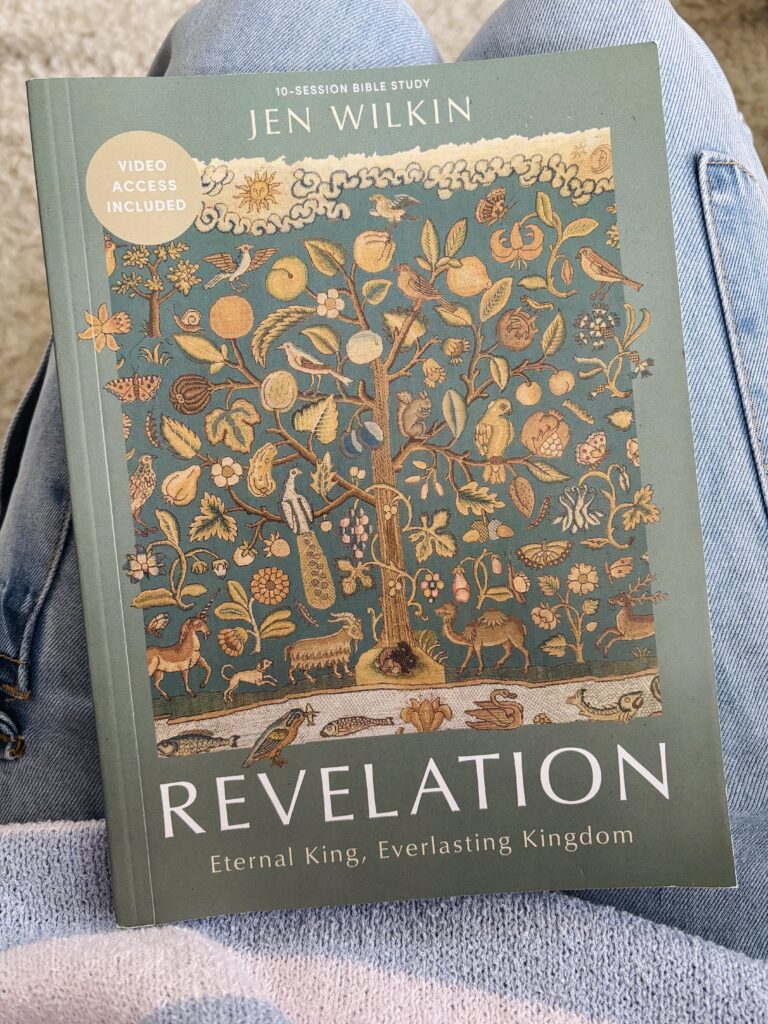
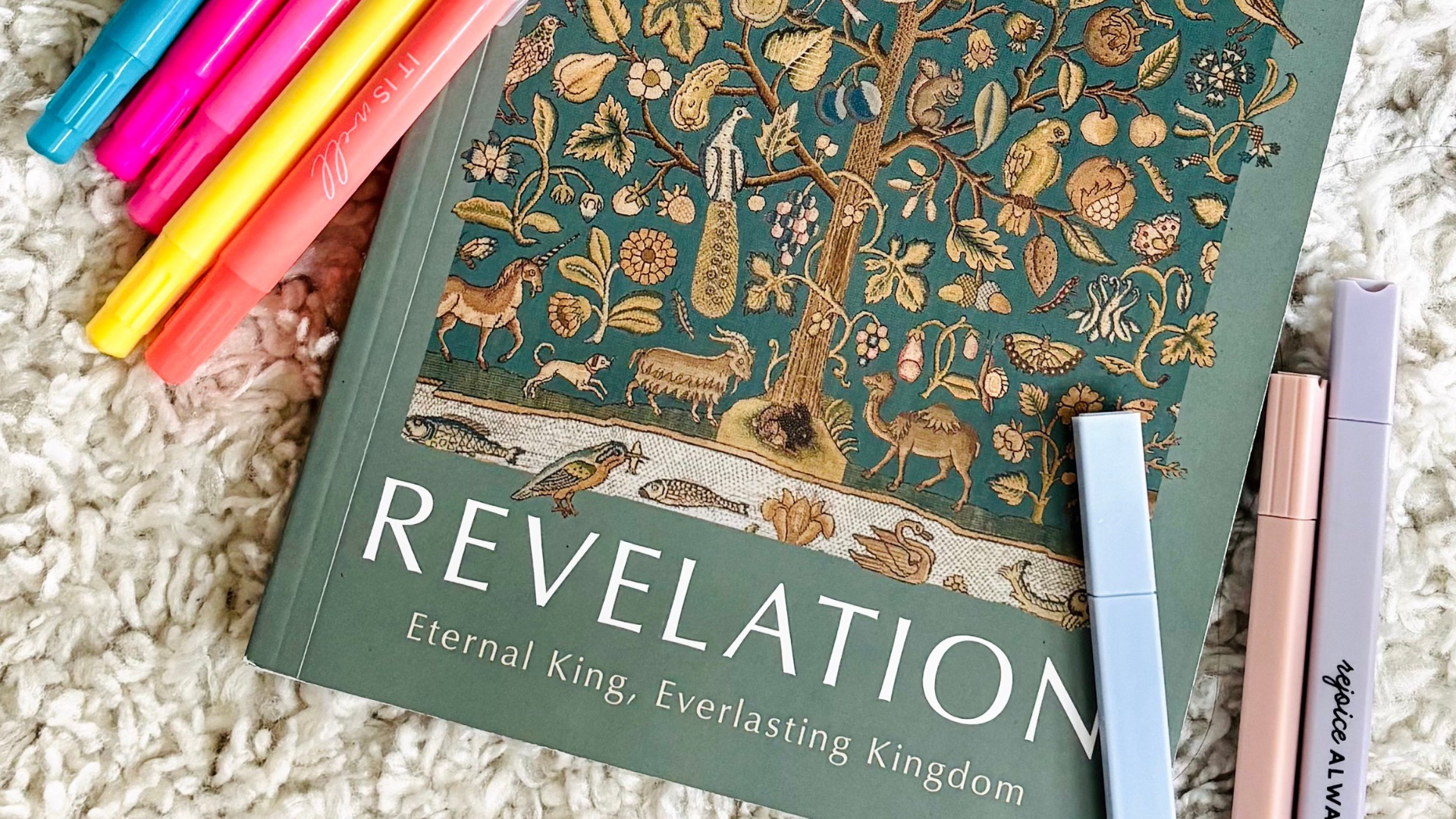
The main backbone of my study is Revelation: Eternal King, Everlasting Kingdom, a 10-session Bible study by Jen Wilkin.
I’m also reading Revelation: The End of Time and the Eternal King from The Daily Grace Co. as more of a devotional companion. (I especially love all the bonus charts and background information it includes.)
I’ve also found that the podcast episodes Jen Wilkin recorded after the study pair really well with it:
Jen Wilkin Revelation Playlist on Spotify
And Jen also included a worship playlist in her study, which has been a great listen while studying:
Revelation Study Playlist on Spotify
I’ve used a few other podcasts and videos along the way too, but I’ll share those resources as we get to them.
Background
The book of Revelation was written by the Apostle John the Apostle while he was exiled on the island of Patmos near the end of his life and ministry.
One resource I really recommend is this episode from Spoken Gospel on who John was and his fascinating use of the number seven throughout his writings:
Gospel of John Overview – A Unique Eyewitness
One of my biggest takeaways from listening to it was realizing just how unique John was as an eyewitness to Jesus.
John personally witnessed two completely opposite realities of Christ in a way no other Gospel writer did.
He stood on the mountain during the transfiguration and saw Jesus revealed in divine glory—the radiant, majestic Son of God in all His splendor.
Yet John also stood near the cross and watched that same Jesus suffer in humiliation, rejected and treated like a criminal as He gave His life for the very people He created.
What makes John’s testimony so powerful is that these weren’t distant stories passed down to him. He saw both scenes with his own eyes. He witnessed both the glory and the suffering of Christ.
He saw Jesus at His highest exaltation and at His lowest earthly suffering, and both revealed who Jesus truly is.
John was also there from the very beginning of Jesus’ ministry as part of His inner circle. He witnessed countless miracles, heard Jesus teach firsthand, saw the empty tomb after the resurrection, and later watched Jesus ascend into heaven.
Because of this, John’s writings carry such depth and conviction. He wasn’t simply writing theology—he was testifying to what he personally experienced.
His Gospel continually reminds us that Jesus is fully God and fully man: the glorious King who willingly humbled Himself out of love to redeem His creation.
Before diving any further into Revelation, I always like to do a bit of a background check so I can better understand the context of what’s happening. One resource I almost always turn to for that is BibleProject.
BibleProject Guide to Revelation
Alrighty, if you’re going to follow along, this is the time to complete Week 1 of Jen Wilkin’s Revelation Bible Study. In my next post, I’ll pick it up from there!
“Blessed is the one who reads aloud the words of this prophecy, and blessed are those who hear the words of this prophecy and keep what is written in it, because the time is near.” – Revelation 1:3
I’ve compiled all of my Revelation Reloaded reflections into one PDF so you can read through them in one place, revisit them as you study, or keep them alongside your Bible as you journey through Revelation for yourself.