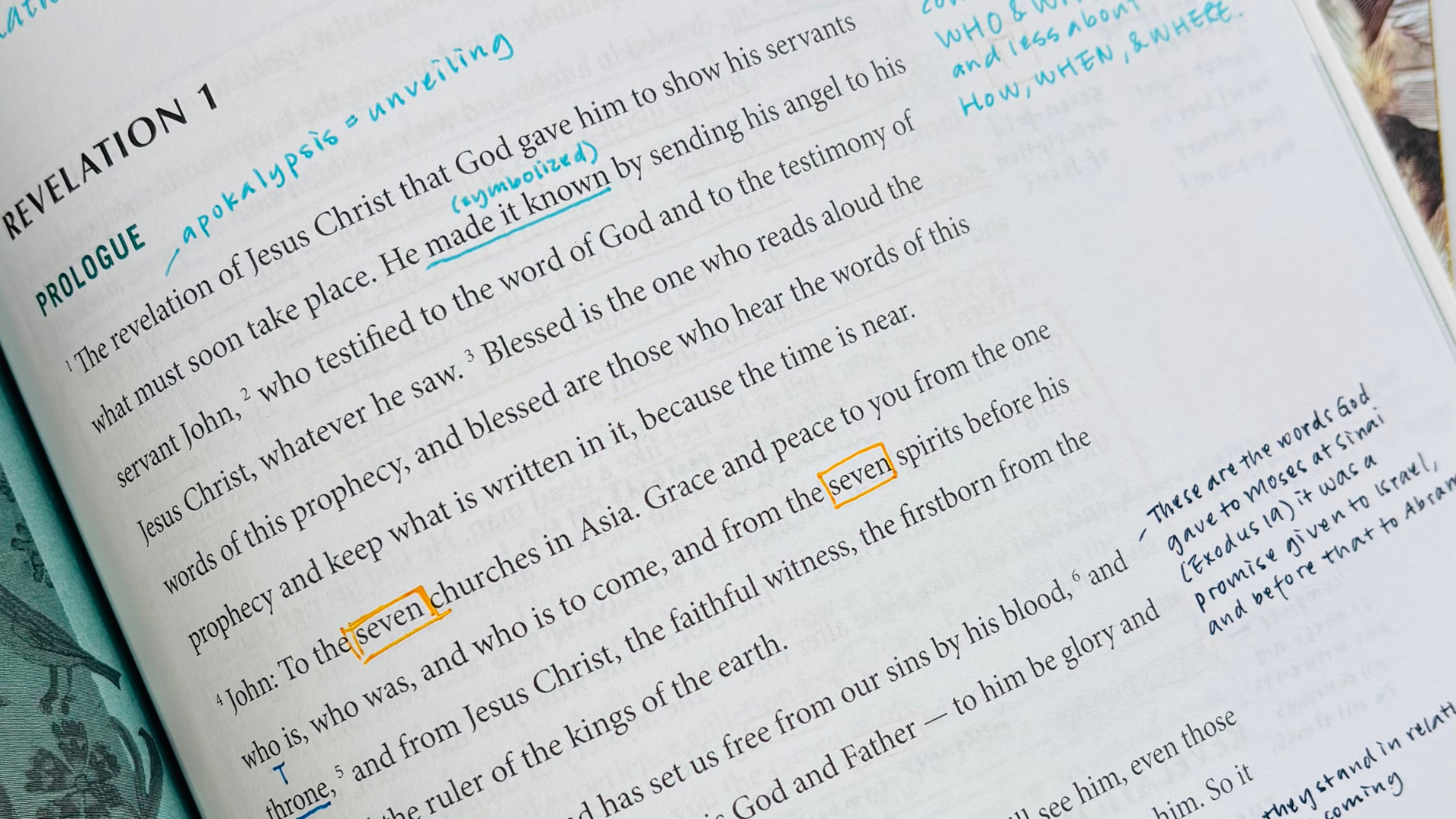
“The revelation of Jesus Christ that God gave Him to show His servants what must soon take place. He made it known by sending His angel to His servant John.” — Revelation 1:1
The word revelation in Greek is apokalypsis, which means “unveiling” or “revealing.” Right from the beginning, we learn that this book is not trying to hide truth from its readers. The purpose of Revelation is actually the opposite—it is revealing truth, bringing things into the light so God’s people can see more clearly.
And according to Revelation 1:3, those who read it, hear it, and keep what is written in it are blessed. Basically… this book begins with a blessing, not a threat if you are in Christ! Wow.
One funny thing I’ve realized while studying Revelation is that I constantly want to call it Revelations—plural. Even while typing this, I keep having to correct myself.
But this book is one revelation, not many revelations.
At its core, Revelation is not mainly about unlocking endless hidden secrets or decoding mysterious timelines. It is one unified revelation meant to ultimately reveal Jesus Christ more clearly to us.
Another interesting detail is the phrase “made it known” in Revelation 1:1. The Greek word used here is sēmainō, which can mean to signify, signal, or communicate through signs and symbols. That matters because it helps set the tone for how we should approach the entire book.
As Jen Wilkin puts it, Revelation is more concerned with asking who and why than simply how, when, or where.
This is where hermeneutics comes in and why understanding literary genre matters so much when reading the Bible. Genre helps us understand how a book is meant to be read. We naturally read poetry differently than history, and we read letters differently than parables.
In the same way, Revelation belongs to a genre called apocalyptic literature.
Apocalyptic literature is highly symbolic and filled with vivid imagery, visions, patterns, and dramatic pictures meant to reveal spiritual realities. It communicates truth through symbols and imagery rather than giving a straightforward, step-by-step timeline of future events.
That doesn’t make the book less true or less important—it simply means we should read it the way it was intended to be read.
So when Revelation describes beasts, dragons, lampstands, or strange heavenly scenes, the first question usually is not, “What literal creature is this?” but rather, “What does this image represent?”
What’s especially fascinating is how much of Revelation echoes the Old Testament—particularly books like Daniel, Ezekiel, Isaiah, and Zechariah. The more I study it, the more I realize Revelation is less like a puzzle book and more like a tapestry woven together from the rest of Scripture.
Here’s a really helpful video from BibleProject if you want to learn more about apocalyptic literature:
Apocalyptic Literature Explained
Another important concept I’m learning about Revelation is something called recapitulation. That’s a big word, but the idea is actually pretty simple.
Recapitulation means Revelation often revisits the same time periods or spiritual realities multiple times, but from different angles and with different imagery—almost like replaying the same event from different camera perspectives.
Instead of reading Revelation as one strictly chronological timeline from beginning to end, many scholars believe the book repeatedly circles back and retells similar realities with increasing intensity and detail.
For example, the seven seals, seven trumpets, and seven bowls all end with scenes involving judgment, cosmic shaking, thunder, lightning, and the defeat of evil. Rather than describing three completely separate endings of the world, many interpreters understand them as different portrayals of God’s judgment and Christ’s victory viewed from different perspectives.
And speaking of sevens, one thing that immediately stands out in Revelation is how often the number seven appears. We see seven churches, seven lampstands, seven seals, seven trumpets, seven bowls, and many other groups of seven throughout the book.
The first appearance of the number is in Revelation 1:4–5:
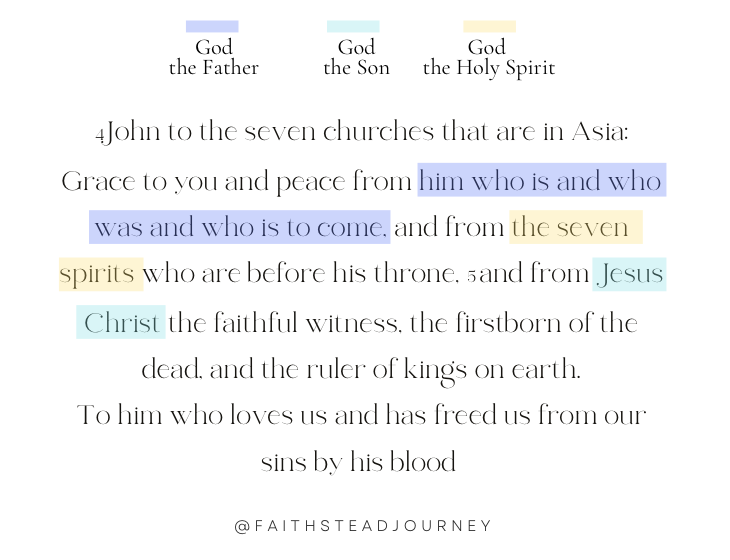
Because the “seven spirits” are mentioned between references to the Father and the Son, many interpreters understand this to be a reference to the Holy Spirit—not seven separate spirits.
Throughout Scripture, the number seven often symbolizes fullness, completeness, or perfection. So the “seven spirits” most likely points to the fullness and perfect ministry of the Holy Spirit.
Some also connect this imagery to Isaiah 11:2, which describes the Spirit resting upon the Messiah with attributes such as wisdom, understanding, counsel, might, knowledge, and the fear of the Lord. These are not separate spirits, but different attributes of the one Holy Spirit.
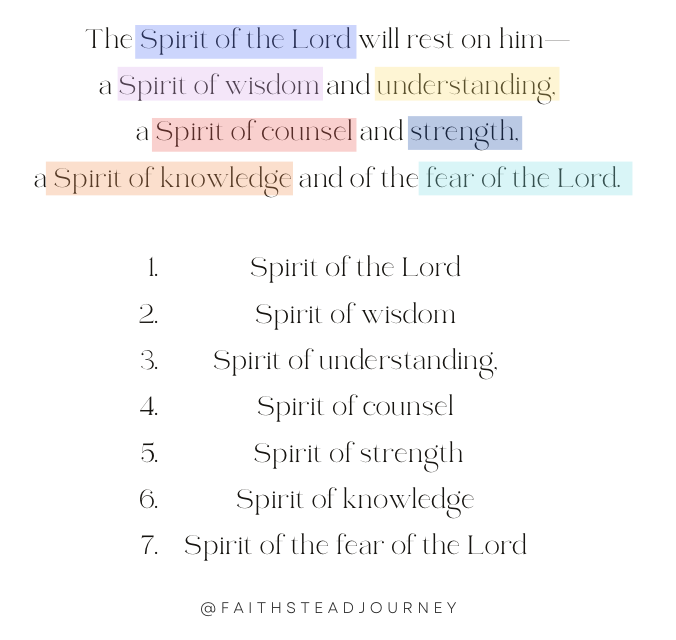
What’s significant is that Revelation introduces symbolic numbers right from the very beginning. John probably is not trying to communicate that there are literally seven Holy Spirits standing before God’s throne. Instead, he is using symbolic imagery to communicate something true about the Holy Spirit.
That realization becomes foundational for understanding the rest of Revelation. The symbols and visions communicate real truth, but often indirectly through imagery, patterns, and symbolism.
The book is not trying to confuse us—it’s inviting us to slow down and pay attention to what the images are meant to reveal.
And honestly, that realization has made Revelation feel far less intimidating and infinitely more beautiful.
Revelation is a commentary on Old Testament prophecy.
jen wilkin
In one of her podcasts, Jen Wilkin mentioned that after studying Revelation, she realized there’s actually nothing “new” in it that wasn’t already woven throughout the rest of Scripture. Revelation doesn’t suddenly introduce a completely different story—it brings the entire biblical story to its climax.
The more we study it, the more we will see echoes of Genesis, Daniel, Ezekiel, Isaiah, Zechariah, and the Gospels throughout its pages.
That perspective completely changed the way I approach the book. Instead of reading Revelation like a cryptic codebook meant to confuse us, I’m beginning to see it as the grand finale of a story God has been telling all along.
“Blessed is the one who reads aloud the words of this prophecy, and blessed are those who hear the words of this prophecy and keep what is written in it, because the time is near.” — Revelation 1:3
I honestly don’t know how I missed this before, but the introduction to Revelation literally says, “Blessed is the one who reads aloud the words of this prophecy.”
How did I grow up thinking this was only a book of fear and doom when it opens with a blessing?
If you’re following along with Jen Wilkin’s Revelation Bible study with me, it’s time to jump into Week 2!
I’ve also attached a free PDF copy of Revelation (CSB) for journaling, highlighting, and note-taking so you don’t have to keep flipping to the back of the study book. There’s also a chart for the seven churches to fill out this week, and if you need a larger printable version, I’ve included that too.
I’ve compiled all of my Revelation Reloaded reflections into one PDF so you can read through them in one place, revisit them as you study, or keep them alongside your Bible as you journey through Revelation for yourself.