Partner in Affliction
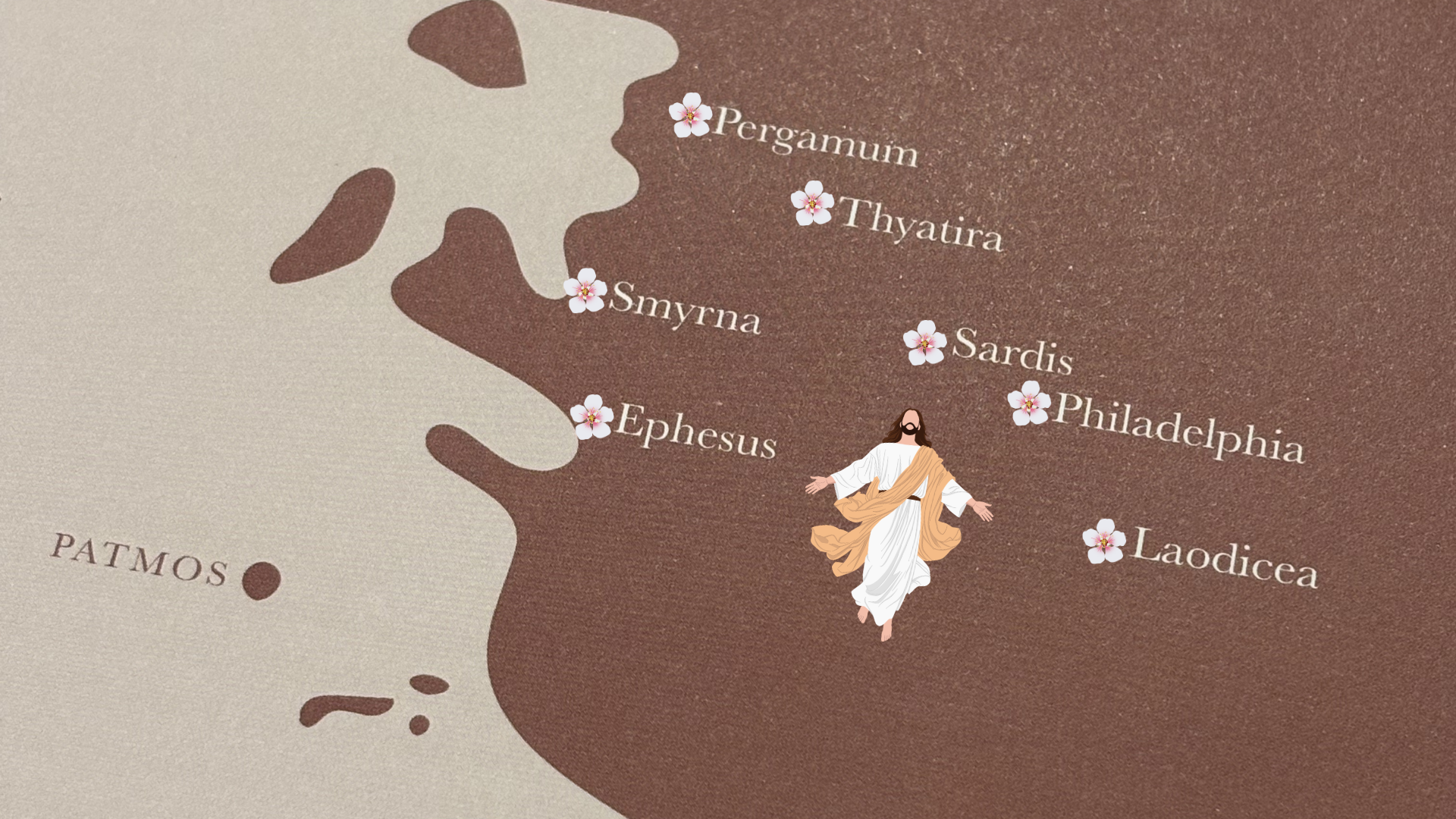
Can you imagine opening your mailbox and finding a letter from Jesus? That’s what we see in our Revelation reading this week. Jesus writes to seven churches. Some letters are full of encouragement, some contain both praise and correction, and one is a serious warning. But beneath every word is the same heartbeat: love. Jesus cares too much about His people to remain silent, so He speaks truth to strengthen, correct, and draw them closer to Himself.
And if you remember seven is a special number that runs through the Book of Revelation. Letters could have been written to three, eight, or thirteen churches, but it was not. Seven churches were chosen to represent what the Spirit has to say to all the churches of all times.
I, John, your brother and partner in the affliction, kingdom, and endurance that are in Jesus, was on the island called Patmos because of the word of God and the testimony of Jesus. – Revelation 1:9
I thought it was interesting that John described himself as a brother and partner. He could have said he was the beloved disciple of Jesus, apostle, elder, or even eye-witness. Instead, he deliberately chose to identify himself alongside the suffering believers.
Remember, this book was written to Asia Minor churches in the midst of persecution and affliction. Most scholars place the writing of Revelation around AD 95-96 during the reign of emperor Domitian. Christians were facing pressure to participate in emperor worship or face social rejection, economic hardship, exile, imprisonment, or even death. John was currently exiled in Patmos so he’s not a distant theologian in comfort, he was literally enduring the same trials alongside them. And this means that the Book of Revelation is not merely a prophecy chart, but a pastoral encouragement for persecuted Christians.
It’s interesting to note that John’s description of sharing in the affliction, kingdom, and endurance summarizes the Christian life: believers suffer in the present, already belong to the kingdom, and are called to faithfully endure until His final victory is revealed. This was also the same pattern Christ followed, suffering before glory. The victory in Revelation is not won through worldly power, but faithful allegiance to Jesus through hardship.
Before judgment is poured out on the world in Revelation, Jesus first addresses His own churches in chapters 2–3. He walks among the lampstands, examining, correcting, warning, and calling His people to repentance. This reflects the biblical principle found in 1 Peter 4:17 that “judgment begins with the house of God.” God first refines and purifies His own people before bringing judgment upon the rebellious world. The churches are called to faithfulness because God’s judgment is not only about condemning evil, but also about purifying a people who belong to Him.
Tim Keller said something that really resonated with me:
“I don’t believe not only that you can live a day-to-day Christian life the way you should without understanding the doctrine of the second coming of Jesus Christ to judge the world, but I’m not even sure you can be emotionally healthy without it.”
He goes on to explain that living with the awareness that Jesus could return at any moment changes the way we live. It keeps us walking in the light. The reality of a coming judgment humbles us, makes us more aware of our own shortcomings, and cultivates greater grace toward others.
Keller points to an illustration from the poet John Donne. Imagine a woman trying to judge how a dress or her makeup will look in daylight while standing under the dim glow of electric lights. The true test comes when she steps into the full light of day.
In the same way, we should not dress our souls for the dim lights of this present world, but for the blazing daylight of Christ’s coming kingdom. The life that matters is the one that can stand in that irresistible light—a light far brighter and more revealing than anything this world can offer.
When we live with eternity in view, our priorities shift. We become less concerned with how we appear before others and more concerned with who we are before God.
Son of Man
And who is this voice speaking to John with a loud voice like a trumpet?
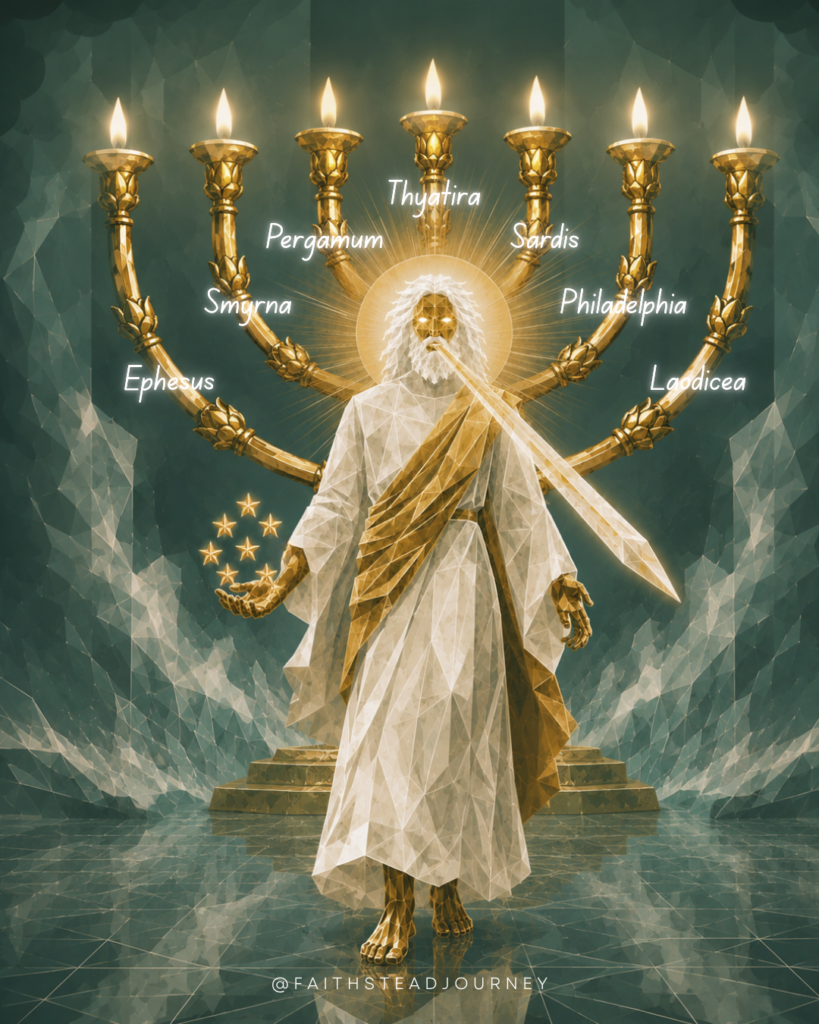
…one like the Son of Man, dressed in a robe and with a golden sash wrapped around his chest. The hair of his head was white as wool – white as snow – and his eyes like a fiery flame. His feet were like fine bronze as it is fired in a furnace, and his voice like the sound of cascading waters. He had seven stars in his right hand; a sharp double-edged sword came from his mouth, and his face was shining like the sun at full strength. – Revelation 1:13-16
John is seeing the risen and glorified Jesus in heavenly majesty. The “loud voice like a trumpet” belongs to Jesus Himself — the “one like the Son of Man” is a direct connection to Book of Daniel 7, where the Son of Man is the divine ruler who receives everlasting dominion and a kingdom from the Ancient of Days. By using this title and imagery, Revelation presents Jesus not merely as a teacher or martyr, but as the exalted King, Judge, and divine ruler over all nations.
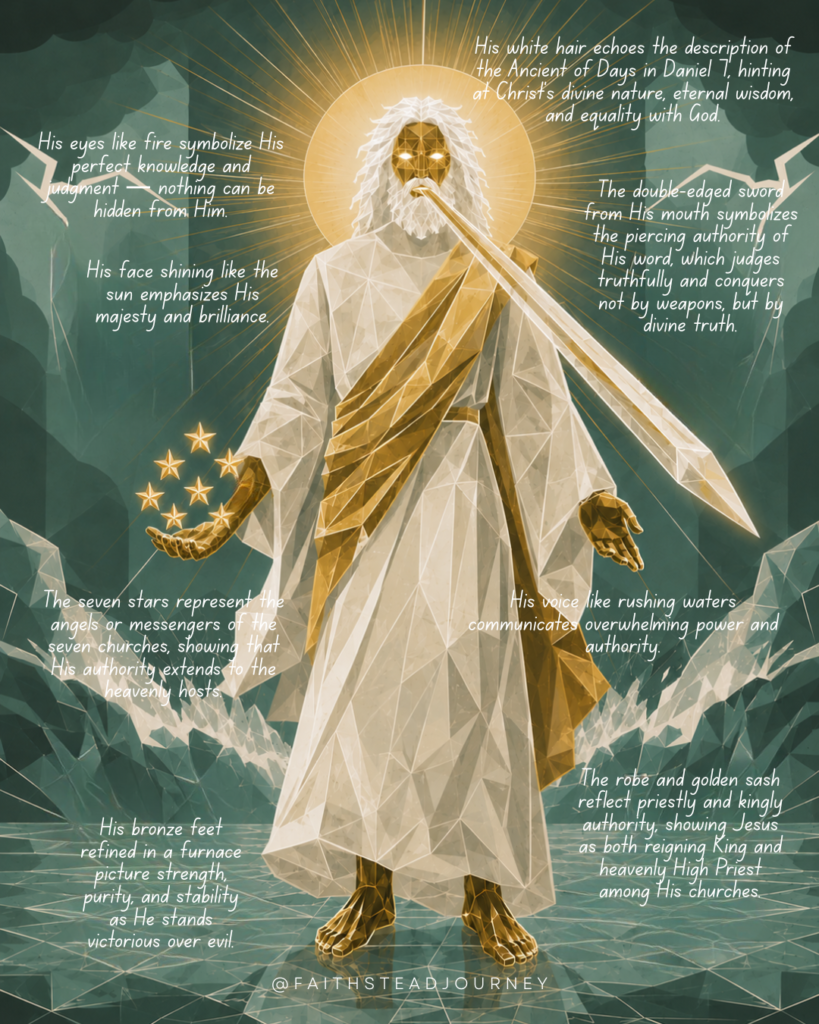
Every detail in the description communicates something about who Jesus is:
- The robe and golden sash reflect priestly and kingly authority, showing Jesus as both reigning King and heavenly High Priest among His churches.
- His white hair echoes the description of the Ancient of Days in Daniel 7, hinting at Christ’s divine nature, eternal wisdom, and equality with God.
- His eyes like fire symbolize His perfect knowledge and judgment — nothing can be hidden from Him.
- His bronze feet refined in a furnace picture strength, purity, and stability as He stands victorious over evil.
- His voice like rushing waters communicates overwhelming power and authority.
- The seven stars represent the angels or messengers of the seven churches, showing that His authority extends to the heavenly hosts.
- The double-edged sword from His mouth symbolizes the piercing authority of His word, which judges truthfully and conquers not by weapons, but by divine truth.
- His face shining like the sun emphasizes His majesty and brilliance.
Before John receives visions about beasts, persecution, judgment, and suffering, he first sees who is truly in control. The churches may feel weak and oppressed under Rome, but Revelation begins by unveiling Jesus as the glorified Lord walking among His churches, fully sovereign, fully divine, and fully victorious.
God with Us
And where is the Son of Man? He is standing among the golden lampstands. And what do the lampstands represent? The seven churches. In Matthew 5:14–16, Jesus reminds His followers that they are the light of the world, meant to shine before others. This imagery goes even deeper when we remember the lampstand in Book of Exodus 25:31–39, crafted of pure gold with branching arms shaped like almond blossoms—designed to symbolize life, light, and God’s dwelling presence in the tabernacle.
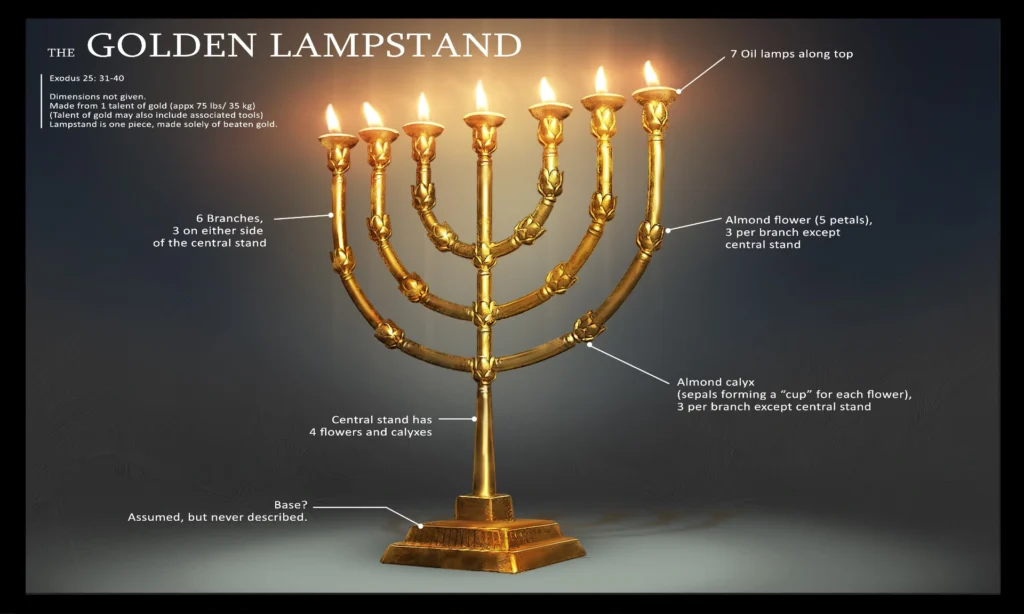
Photo Source: https://www.biblicaltoolbelt.com
That almond blossom imagery also connects beautifully with Book of Jeremiah 1:11–12, where the almond branch becomes a wordplay for God “watching” over His word to perform it. In Hebrew, the word for “almond” (shaqed) sounds like the word for “watching” (shoqed). So when God shows Jeremiah an almond branch, it’s a wordplay: the almond tree becomes a symbol that God is not passive, but awake, alert, and actively watching over His promises and present with His people.
When you connect these images, a powerful picture emerges. Jesus is not distant from His people; He is in their midst, just as light flows through a lampstand. Like a living “tree of light,” the church reflects the life of Christ, who Himself says in John 15 that He is the vine and we are the branches. In that sense, the church does not generate its own light or life—it abides in Him.
This also reshapes how we understand persecution. When Jesus confronts Saul on the road to Damascus, He doesn’t ask, “Why are you persecuting My people?” but “Why are you persecuting Me?” (Acts 9:4). To harm the church is to touch Christ Himself, because He is united to His people.
So when John sees Jesus standing among the golden lampstands, he is giving suffering believers a breathtaking assurance: Christ is not absent from their struggle—He is present in the center of the furnace with them like the mysterious man in the fire with Daniel’s three friends. He is Emmanuel, God with us, and the living Lord who sustains His church from within.
This vision is meant to strengthen weary believers with the reminder that the crucified Christ is now the reigning King. Revelation pulls back the veil so that what looks like chaos on earth is revealed as a reality already held together by Christ’s rule. Though we live in the “not yet,” surrounded by uncertainty and pressure, we are not abandoned. Christ has overcome—and what is now hidden will one day be fully revealed.
Letters to the Seven Church
Here’s a chart comparing the letters to the seven churches.
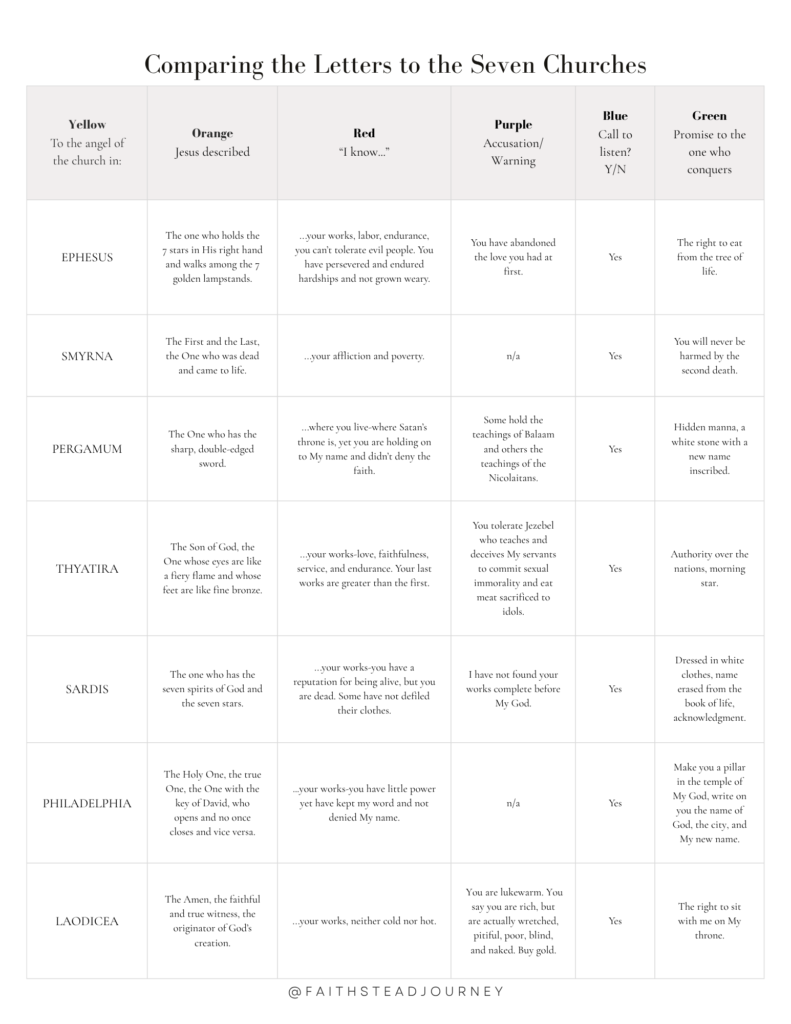
Some definitions for context:
Balaam – A false teacher from the Old Testament (Numbers 22–25; 31:16) who led Israel into sin by encouraging idolatry and sexual immorality. “The teaching of Balaam” refers to corrupt influence that leads believers to compromise with pagan culture and sin for personal gain.
Nicolaitans – A group whose teachings or practices encouraged moral compromise, especially participation in pagan feasts and sexual immorality. Jesus condemns their works as something He hates, likely because they blurred the line between Christian faith and idolatrous society.
Jezebel – A symbolic name (from 1 Kings 16–21) used for a false prophetess in the church at Thyatira. It represents deceptive spiritual leadership that promotes idolatry and sexual immorality while claiming divine authority, leading believers away from faithful obedience to Christ.
If you want to a little more information about the seven churches:
A few thoughts…
People often assume the church is meant to be visibly perfect, but the message to the seven churches shows something very different. Jesus speaks directly to real congregations with real strengths and real failures—some are faithful under pressure, others are drifting into compromise, spiritual apathy, or false teaching. And yet, He does not abandon them; instead, He corrects, warns, and calls them back to repentance. This shows that the church in this age is not a flawless community, but a redeemed people still being shaped by Christ as He walks among His lampstands.
Jen Wilkin mentioned something that really gave me some food for thought. She points out that Satan often works through three strategies: seduction, deception, and persecution. Seduction pulls us toward living like the world, and deception leads us to believe lies instead of God’s truth. Persecution is the pressure or suffering that comes when faithfulness to Jesus stands in contrast to everything else. And that when Satan is successful with seduction and deception, perhaps he does not need to use persecution.
Lastly, each promise to the one who “conquers” is really a promise that flows out of what Jesus Himself has already secured in Book of Revelation. Nothing He promises is separate from Him—it is all participation in His victory, His life, and His inheritance.
This is why the language is so powerful: Jesus is not just giving rewards like a distant king handing out prizes. He is sharing His own inheritance with His people. What belongs to Him by right—life, authority, fellowship with God, victory over death, and reign in His kingdom—is being extended to those who belong to Him.
So when believers are promised the tree of life, a white stone, a new name, authority, or the right to sit with Him on His throne, these are all echoes of what Jesus has already received through His death, resurrection, and exaltation. He is the true Conqueror, and we conquer only in Him. And the call to “overcome” is not a call to achieve something distant, but to remain in close fellowship with the One who has already overcome—the One who joyfully shares everything He has secured with His people.
Lastly, if you’re interested in hearing real-life applications for the seven letters to the churches you can check out these sermons from Gospel in Life.
If you’re following along with Jen Wilkin’s Revelation Bible study, it’s time to dig into Week 3!
I’ve compiled all of my Revelation Reloaded reflections into one PDF so you can read through them in one place, revisit them as you study, or keep them alongside your Bible as you journey through Revelation for yourself.