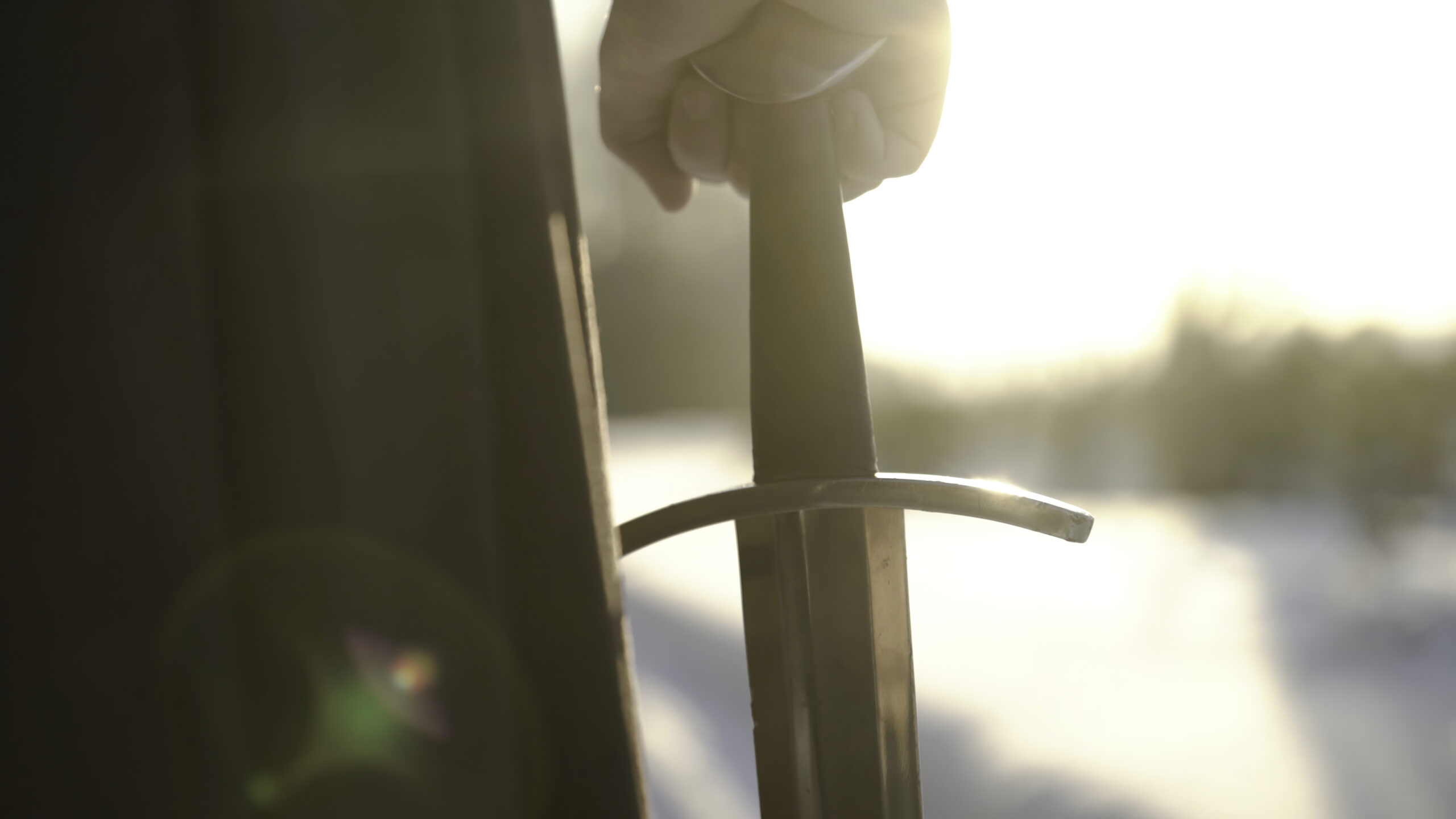
War is something we often think of as wholly bad—something to be avoided at all costs. But as I’ve been reading The Holiness of God by R.C. Sproul, I was struck by this idea: sometimes war is necessary to establish peace.
In the beginning, humanity declared war on God. In the garden, through Adam and Eve, we essentially said, “We’ll do it our own way—thank you very much.” Had God remained aloof in heaven, indifferent to our wayward world, we likely would have self-destructed long ago.
But God, who is rich in mercy, did not stand at a distance. He intervened—personally.
He declared war on sin and death, and began preparing for battle. Through the line of Israel, He promised a Savior. A war was waged not for destruction, but for redemption. Not to bring an end to humanity, but to bring about everlasting peace.
And when the fullness of time came, the showdown began. Jesus Christ entered the world through the incarnation—not as Superman, but as a helpless babe. When He rode into Jerusalem on Palm Sunday, it wasn’t on a haughty stallion, but on a humble donkey.
This war would not be won by taking lives—but by laying down His own.
At the cross, Jesus bore our punishment. Victory came through His death—so that we would not have to die in ours. Because this war was fought and won, we can now have peace with God.
But the battle isn’t over. The question still stands:
Is there a battle raging in your life today? Are you wrestling with God—or with sin? Which side are you on?
In our sinful nature, when God’s saving hand reaches down for us, it is not often welcomed immediately. We resist. We struggle. We wrestle with His grace because our instinct is to rely on ourselves—to win on our own terms.
Even in Scripture, we see different responses to Jesus. The disciples and the Pharisees both struggled with His hard sayings. One surrendered, and peace was made; the other would not admit defeat and sought to conquer.
When Jacob wrestled with the “mysterious” man, Scripture tells us that when the man saw he did not prevail against him, he touched Jacob’s hip and left him with a limp.
Have you ever stopped to wonder—what might have happened if that touch had never come? Would Jacob have continued striving, thinking he could win? And in doing so, would he have missed the greater blessing of truly knowing God?
What if the limp was not a mark of defeat, but a sign of peace?
Perhaps it is God’s grace when we are weakened to the point that we finally reach out to Him for blessing. Left to ourselves, we would keep wrestling—determined to be the victor, determined to conquer. But God, in His mercy, does not let us win this battle.
And there’s another response I see increasingly in our culture today—the response of Pontius Pilate.
Detached. Observing. Neutral… or so we think.
When Jesus said, “For this purpose I was born… to bear witness to the truth. Everyone who is of the truth listens to my voice,” Pilate responded with a question that still echoes today: “What is truth?”
As my pastor put it so eloquently, subjective truth wasn’t just a modern invention—Pilate was already practicing it.
Pilate thought he could remain uninvolved—but there is no true neutrality in the battle for our souls. Pilate still participated in the very outcome he claimed to avoid. In the same way, when we refuse to wrestle, we are refusing to surrender. We are choosing to side with death.
There is a war—and every one of us is in it. And that’s a good thing. Because this battle is not against us, but for us. It is God’s pursuit of our hearts, His refusal to leave us in sin, His determination to bring us into peace. Without the war, we would remain lost—but because of it, we are invited to be found.
The only question is: will we resist Him and seek to conquer… or surrender and find peace? Choose your side—because neutrality is not an option.